

Six inches is a short but commonly used measurement in everyday life. You may come across it when measuring objects, checking product dimensions, comparing lengths, or working on home and DIY projects. Knowing the exact equivalent can make this size much easier to visualize.
The good news is that this length has simple conversions. It equals 15.24 centimeters, 152.4 millimeters, and 0.5 feet. Since half a foot is exactly six inches, it is also an easy measurement to remember.
This guide explains the size in different units and compares it with familiar objects. You will also learn practical ways to measure it when you do not have a ruler nearby.
Exact Measurement in Different Units
The most useful conversions are shown below:
| Unit | Equivalent |
|---|---|
| Inches | 6 inches |
| Centimeters | 15.24 cm |
| Millimeters | 152.4 mm |
| Meters | 0.1524 m |
| Feet | 0.5 ft |
| Yards | 0.1667 yd |
The centimeter conversion comes from multiplying six by 2.54 because one inch equals exactly 2.54 centimeters.
Likewise, multiplying 6 by 25.4 gives 152.4 millimeters. In meters, the same distance is 0.1524 meter.
One particularly useful relationship is:
6 inches = ½ foot
That makes this measurement convenient when working with feet and inches.
How Long Is 6 Inches in Centimeters?
The exact length is 15.24 cm.
For everyday estimates, you might round this to about 15.2 cm. However, when accuracy matters, especially for construction, crafting, manufacturing, or product dimensions, 15.24 cm is the correct conversion.
A 15-centimeter ruler comes very close to this size, but it is actually 0.24 cm shorter. That difference equals 2.4 millimeters.
How Long Is It in Millimeters?

Six inches equals 152.4 mm.
This can be useful when working with smaller components because millimeters provide more precision than centimeters.
For example:
- 6 inches = 152.4 mm
- 5.5 inches = 139.7 mm
- 6.5 inches = 165.1 mm
- 7 inches = 177.8 mm
So, moving from six to seven inches adds exactly 25.4 mm.
Half a Foot
A simple way to remember this measurement is to think of a standard foot.
One foot contains 12 inches. Half of 12 is 6, so six inches represents exactly half a foot.
This relationship is particularly useful when estimating lengths without converting between several different units.
For example, if a board is described as being 2 feet 6 inches long, its total length is:
24 + 6 = 30 inches
The six-inch portion represents the final half-foot.
Visualizing the Length
Numbers can sometimes be difficult to picture. Comparing the distance with familiar items makes the size much easier to understand.
A length of 6 inches is roughly:
- Half of a 12-inch ruler
- Slightly shorter than 16 centimeters
- One-half of a foot
- Twice the length of 3 inches
- One-third of 18 inches
- About 15.24 centimeters
Keep in mind that everyday objects are manufactured in different sizes, so object comparisons are useful for visualization rather than exact measurement.
Common Objects Around 6 Inches Long
Several ordinary objects can help you develop a mental picture of this length.
Half of a Standard Ruler
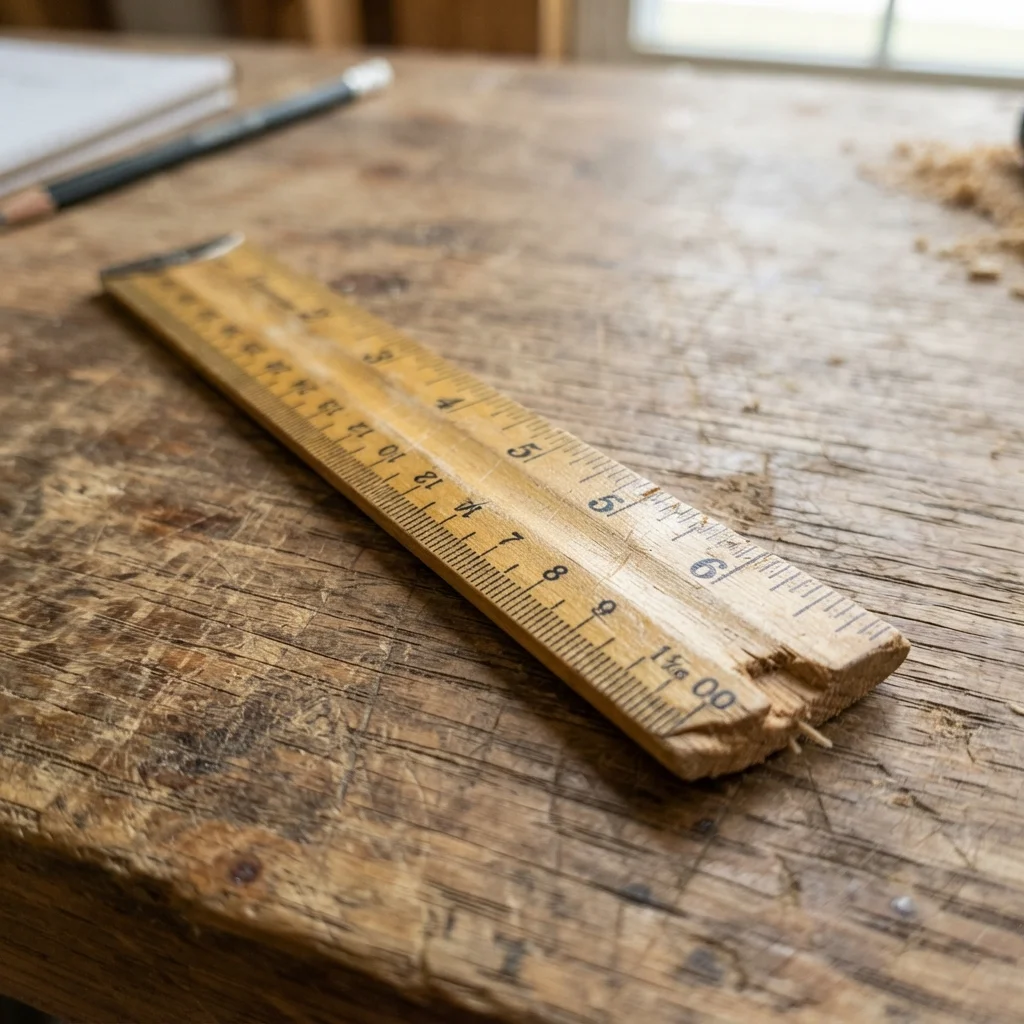
A traditional ruler is often 12 inches long. Half of that ruler measures exactly six inches.
This is one of the easiest visual references because you can simply imagine the ruler divided into two equal sections.
A Small Tablet or Device

Some compact electronic devices can have dimensions close to six inches in one direction. However, device measurements vary considerably, so the actual width or height should always be checked in the product specifications.
A Short Pencil

Some pencils, especially shorter writing pencils or pencils that have been used for a while, can approach this length. A new standard pencil is usually considerably longer, so it should not be treated as an exact six-inch reference.
A Small Kitchen or Craft Object

Many small kitchen tools, craft supplies, and household accessories have dimensions in the five-to-seven-inch range. These can give you a reasonable visual sense of the distance, although their exact dimensions depend on the product.
Comparing 6 Inches With Other Lengths
Looking at nearby measurements helps put the size into perspective.
| Length | Centimeters | Difference From 6 Inches |
|---|---|---|
| 3 inches | 7.62 cm | 3 inches shorter |
| 4 inches | 10.16 cm | 2 inches shorter |
| 5 inches | 12.70 cm | 1 inch shorter |
| 6 inches | 15.24 cm | — |
| 7 inches | 17.78 cm | 1 inch longer |
| 8 inches | 20.32 cm | 2 inches longer |
| 10 inches | 25.40 cm | 4 inches longer |
| 12 inches | 30.48 cm | 6 inches longer |
The difference between neighboring inch measurements is always 2.54 cm.
That means five inches is 2.54 cm shorter, while seven inches is 2.54 cm longer.
6 Inches vs. 5 Inches
The difference between these two measurements is exactly 1 inch, or 2.54 cm.
That may sound small, but the difference can become noticeable when measuring an object precisely.
For example, an item measuring 15.24 cm is substantially longer than one measuring 12.70 cm when the two are placed side by side.
6 Inches vs. 7 Inches
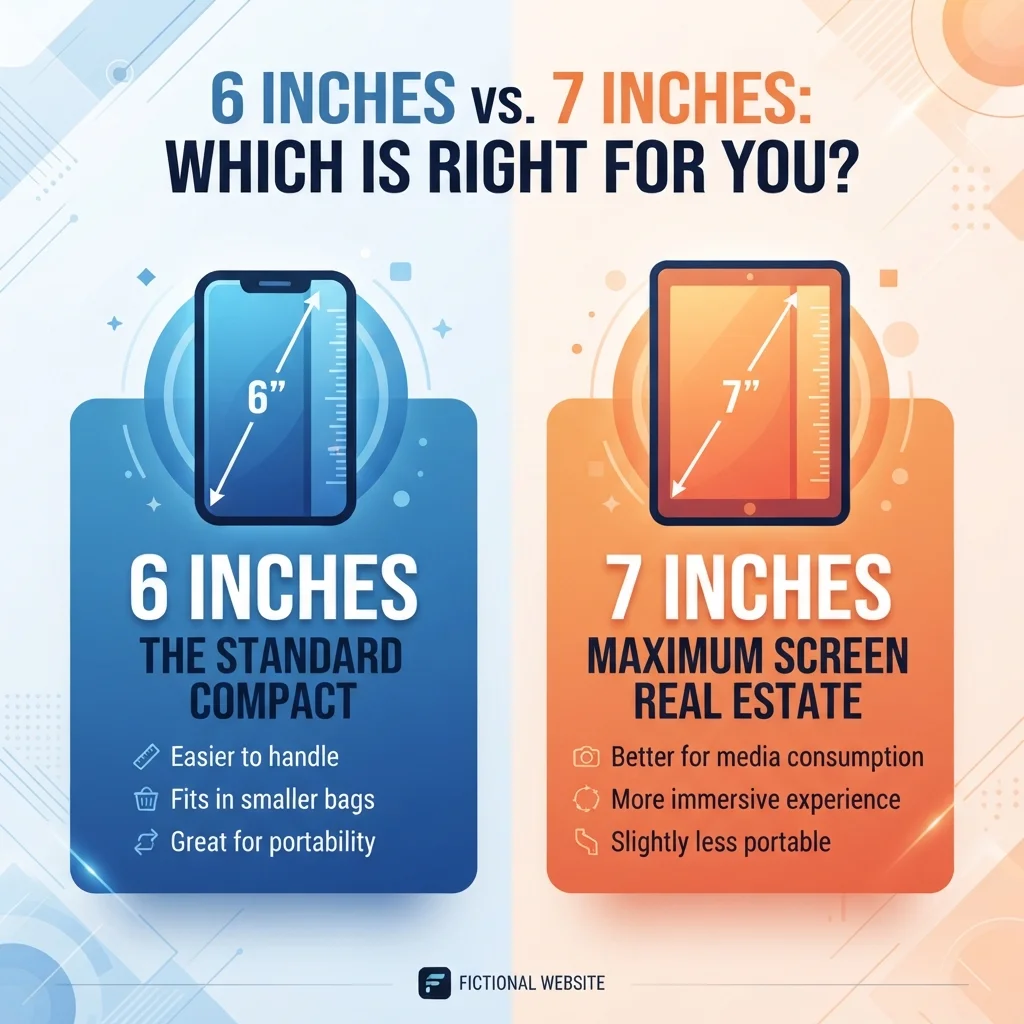
Seven inches equals 17.78 cm, making it 2.54 cm longer.
The difference can be visualized by placing a one-inch segment at the end of the shorter measurement.
For objects where dimensions need to fit inside a particular space, that extra inch can matter.
6 Inches vs. 1 Foot
One foot equals 12 inches, so six inches is exactly half as long.
In centimeters:
- 6 inches = 15.24 cm
- 12 inches = 30.48 cm
This makes the relationship especially easy to visualize. If you divide a 12-inch ruler into two equal sections, each section measures six inches.
Is 6 Inches Considered Long?
Whether this size is considered long depends on what you are measuring.
For a small household object, six inches can be fairly substantial. For a piece of furniture, however, it is relatively short. In construction, six inches can be an important dimension for spacing, depth, or material thickness.
Context matters because length has no universal description as “long” or “short.”
A six-inch cable, for example, would be very short for many uses. A six-inch decorative object could be a noticeable size.
How to Measure 6 Inches Without a Ruler
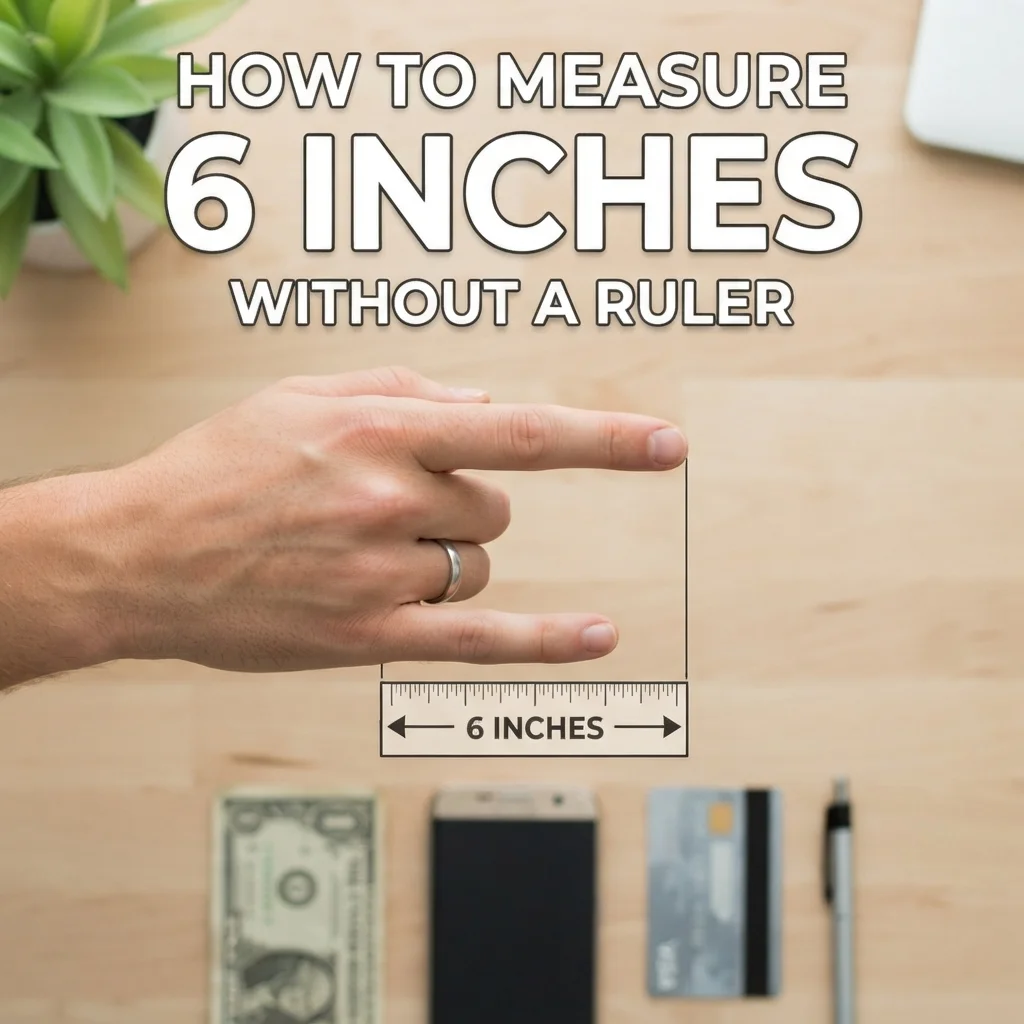
If you do not have a measuring tape or ruler, several methods can provide a rough estimate.
Use Half of a Foot
Because one foot contains 12 inches, half of a standard 12-inch ruler is exactly six inches.
If you have a ruler but cannot see the markings clearly, identifying its halfway point can still give you the correct length.
Use a 15 cm Reference
Six inches equals 15.24 cm. A 15 cm object is therefore extremely close, although it is 2.4 mm shorter.
For rough household measurements, this can provide a useful approximation.
Use a Smartphone
Many smartphones have dimensions close to several inches in one direction, but phone sizes vary significantly. Do not assume your phone measures exactly six inches.
Instead, check your specific phone’s official dimensions before using it as a reference.
Use a Printable Ruler
A printable ruler can be useful if it has been printed at its intended scale. Printer settings such as “fit to page” can change the dimensions, so the printed scale should be checked before relying on it.
Why Accurate Measurement Matters

An estimate may be enough when you are simply trying to visualize a size. Precision becomes more important for practical projects.
A small error can affect:
- Furniture placement
- DIY construction
- Crafting
- Woodworking
- Jewelry sizing
- Product selection
- Fabric cutting
- Hardware installation
- Packaging dimensions
For these situations, using a ruler or measuring tape is better than relying on an object comparison.
Six Inches in Construction and DIY Projects
In home improvement, inch measurements are still commonly used for boards, pipes, gaps, fixtures, and other materials.
A six-inch dimension may refer to width, depth, spacing, or length. These measurements should not be confused with one another.
For example, a board that is six inches wide is not necessarily six inches thick or six inches long. Each dimension describes a different direction.
When measuring a rectangular object, check whether the specification refers to:
- Length
- Width
- Height
- Depth
- Diameter
- Thickness
This distinction is important because the same number can describe completely different physical dimensions.
Six Inches as a Diameter

Six inches can also describe the diameter of a circular object.
A circle with a six-inch diameter has a radius of 3 inches.
Its approximate circumference would be:
6 × π ≈ 18.85 inches
The approximate area would be:
π × 3² ≈ 28.27 square inches
These calculations apply only when six inches refers to the diameter, not the circumference or another measurement.
Six Inches on a Screen

When discussing phones, tablets, or displays, six inches often refers to the diagonal screen measurement rather than the width.
For example, a 6-inch display does not mean the screen is six inches wide.
A 16:9 screen with a six-inch diagonal has an approximate active display area of:
- 5.23 inches wide
- 2.94 inches tall
That is approximately:
- 13.29 cm wide
- 7.47 cm tall
Actual devices may have different aspect ratios, so the width and height can vary even when two displays have the same diagonal measurement.
Six Inches of Water or Other Material

The number can also describe depth.
For example, six inches of water means the vertical depth is 6 inches, or 15.24 cm.
This is different from six square inches, which measures area, and six cubic inches, which measures volume.
Understanding the units is essential:
- 6 inches = length
- 6 square inches = area
- 6 cubic inches = volume
Changing the unit changes what is being measured.
A Quick Conversion Formula
If you need to convert this measurement yourself, these formulas are useful.
Inches to Centimeters
Multiply by 2.54:
6 × 2.54 = 15.24 cm
Inches to Millimeters
Multiply by 25.4:
6 × 25.4 = 152.4 mm
Inches to Feet
Divide by 12:
6 ÷ 12 = 0.5 ft
Inches to Meters
Multiply by 0.0254:
6 × 0.0254 = 0.1524 m
These formulas can be applied to other inch measurements as well.
Frequently Asked Questions
Is 6 inches the same as 15 cm?
Not exactly. Six inches equals 15.24 cm. Therefore, it is 0.24 cm longer than 15 cm.
How many millimeters are in 6 inches?
There are 152.4 millimeters in six inches.
Is 6 inches half a foot?
Yes. A foot contains 12 inches, so six inches is exactly half a foot.
How many feet is 6 inches?
Six inches equals 0.5 feet.
How many meters are 6 inches?
Six inches equals 0.1524 meters.
Is 6 inches the same as 1/2 foot?
Yes. Both measurements represent exactly the same length.
How can I visualize this size?
The easiest reference is half of a standard 12-inch ruler. You can also think of it as approximately 15.24 cm.
Does a 6-inch screen measure six inches wide?
No. A screen described as six inches usually has a six-inch diagonal, measured from one corner to the opposite corner.
Conclusion
Six inches is exactly 15.24 centimeters, 152.4 millimeters, 0.1524 meters, or half a foot. These conversions make the measurement easy to use across different systems.
For visualization, half of a standard 12-inch ruler provides one of the simplest references. Comparing the size with nearby measurements such as five, seven, eight, or twelve inches can also make the difference easier to understand.
Remember that the meaning of the measurement depends on the context. On a display, six inches may describe a diagonal; on a circular object, it could represent a diameter; and in construction, it may describe length, width, depth, or spacing. When accuracy matters, a ruler or measuring tape remains the best option.

Lucas Morgan is a passionate writer who enjoys creating helpful, engaging, and practical content for readers. He focuses on sharing clear ideas, useful insights, and creative inspiration through every article.


