
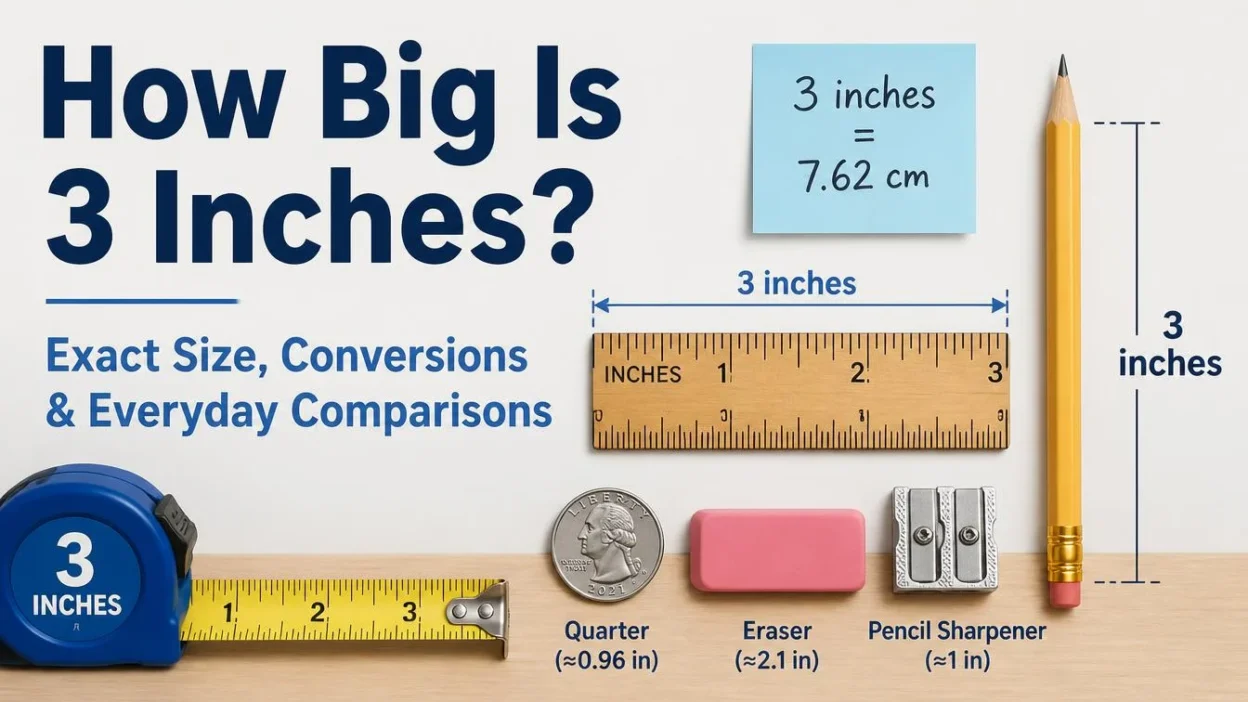
Three inches is a small measurement that appears in many everyday situations. It equals 7.62 centimeters, 76.2 millimeters, and one-quarter of a foot. Although the number may seem simple, visualizing this length can be difficult without a familiar reference.
A ruler makes the measurement easy to check, but everyday objects can also help you understand its size. A standard U.S. dollar bill, credit card, baseball, and small sticky note all provide useful comparisons, although some are approximate.
This guide explains the exact length, common conversions, practical comparisons, and simple ways to estimate the measurement when you do not have a ruler available.
Exact Size in Inches, Centimeters, and Millimeters

The standard conversion between inches and centimeters is:
1 inch = 2.54 centimeters
Using that conversion:
3 × 2.54 = 7.62 centimeters
Therefore, three inches equals 7.62 cm.
To convert the same distance into millimeters:
7.62 × 10 = 76.2 millimeters
Here are the main conversions:
| Unit | Equivalent |
|---|---|
| Inches | 3 in |
| Centimeters | 7.62 cm |
| Millimeters | 76.2 mm |
| Feet | 0.25 ft |
| Yards | 0.0833 yd |
| Meters | 0.0762 m |
| Kilometers | 0.0000762 km |
These values represent the same physical length. Only the measurement unit changes.
Three Inches on a Ruler
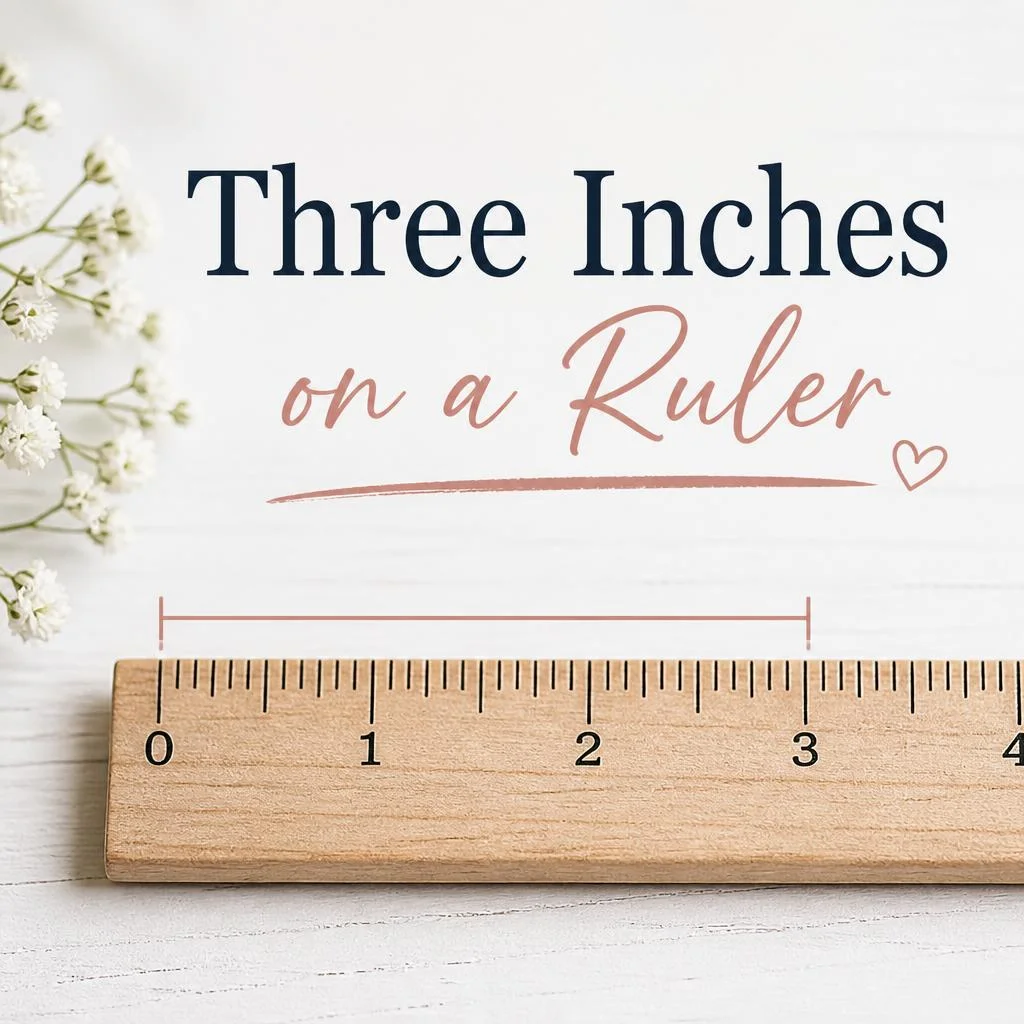
The easiest way to visualize the distance is to use a standard ruler.
Start at the 0-inch mark and move along the ruler until you reach the 3-inch mark. The space between those two points represents the complete length.
A typical 12-inch ruler provides an especially useful reference because the distance takes up exactly one-quarter of its total length.
For example:
- 0 to 1 inch = 1 inch
- 0 to 2 inches = 2 inches
- 0 to 3 inches = 3 inches
- 0 to 12 inches = 1 foot
If you own a ruler with both inch and centimeter markings, you can see that the 3-inch point lines up with 7.62 cm on the metric scale.
Is 3 Inches One-Quarter of a Foot?
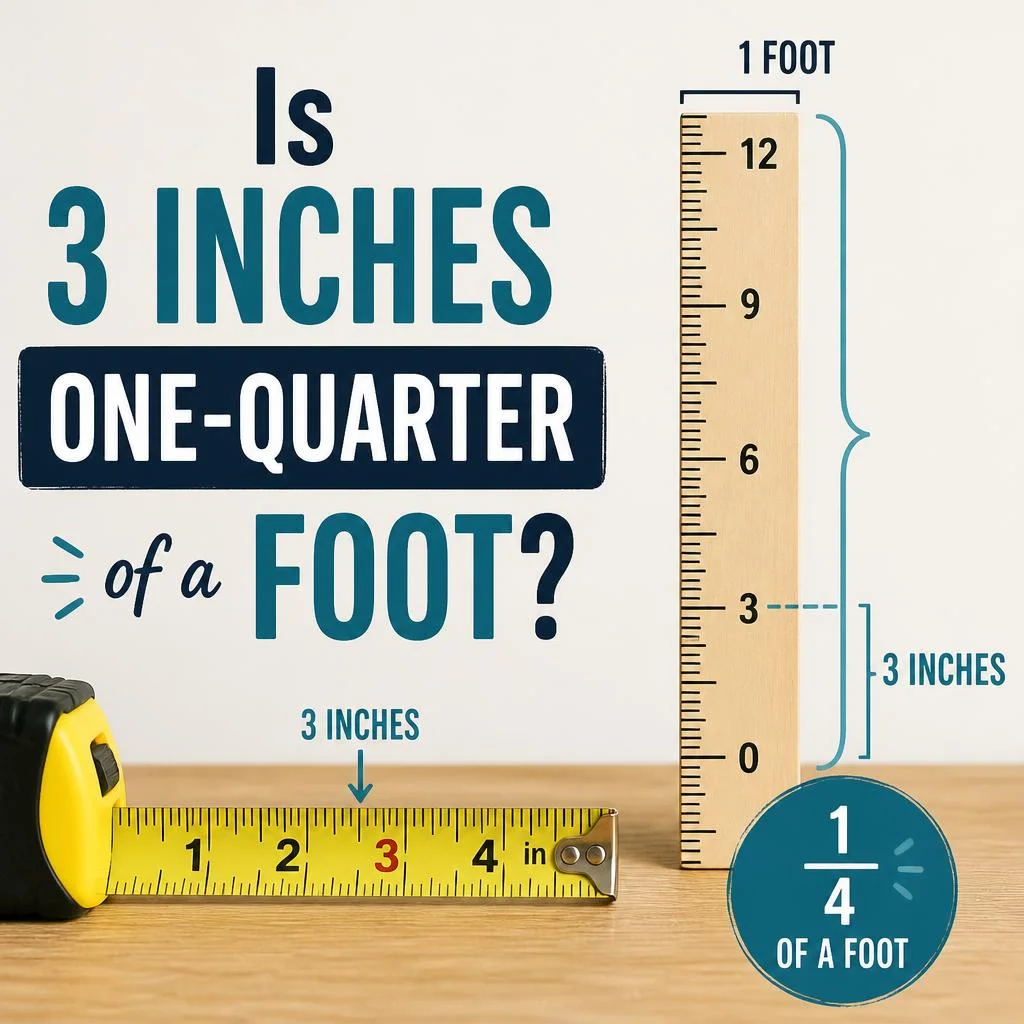
Yes. A standard foot contains 12 inches.
To calculate the fraction:
3 ÷ 12 = 0.25
Therefore:
3 inches = 0.25 feet = ¼ foot
This is one of the easiest facts to remember about the measurement.
If you divide a 12-inch ruler into four equal sections, each section measures exactly 3 inches.
What Does 3 Inches Look Like?
The measurement is approximately the length of a small household item or the diameter of certain common objects.
For visualization, imagine a line that measures just under 8 centimeters. That gives you a reasonable mental picture of the distance.
Several familiar references can make it easier:
- About half the length of a U.S. dollar bill
- Slightly shorter than the width of a standard credit card
- Very close to the diameter of a regulation baseball
- Similar to one side of a 3-by-3-inch sticky note
- One-quarter of a standard 12-inch ruler
These comparisons are useful for visualization, but they should not replace an actual measuring tool when exact accuracy matters.
Comparing the Length With a U.S. Dollar Bill
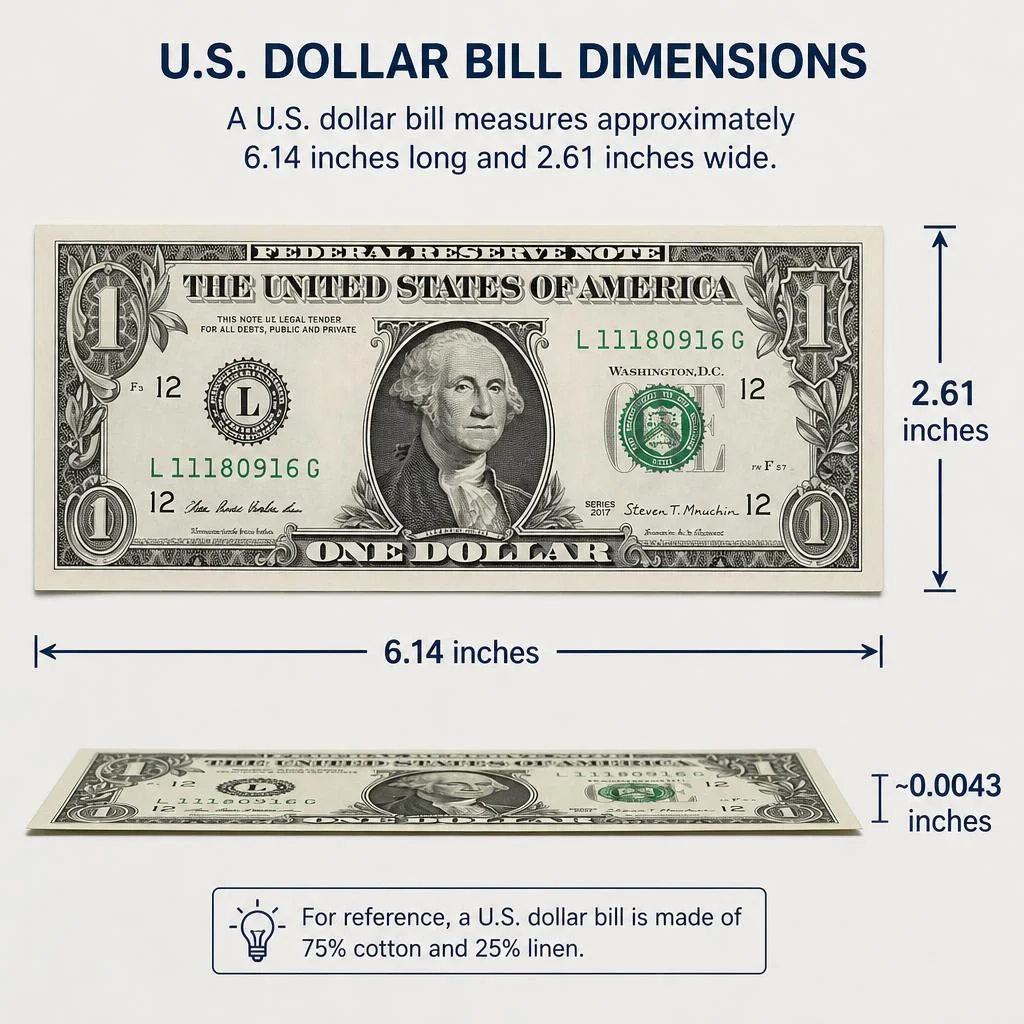
A U.S. dollar bill measures approximately 6.14 inches long and 2.61 inches wide.
The long side provides a particularly useful reference.
Half of the bill’s length is:
6.14 ÷ 2 = 3.07 inches
That means half the length of a dollar bill is only about 0.07 inch longer than three inches.
In other words, if you look at the long side of a dollar bill and imagine cutting it into two equal sections, one section would be almost exactly this length.
This makes a dollar bill one of the better everyday visual references.
Comparing It With a Credit Card
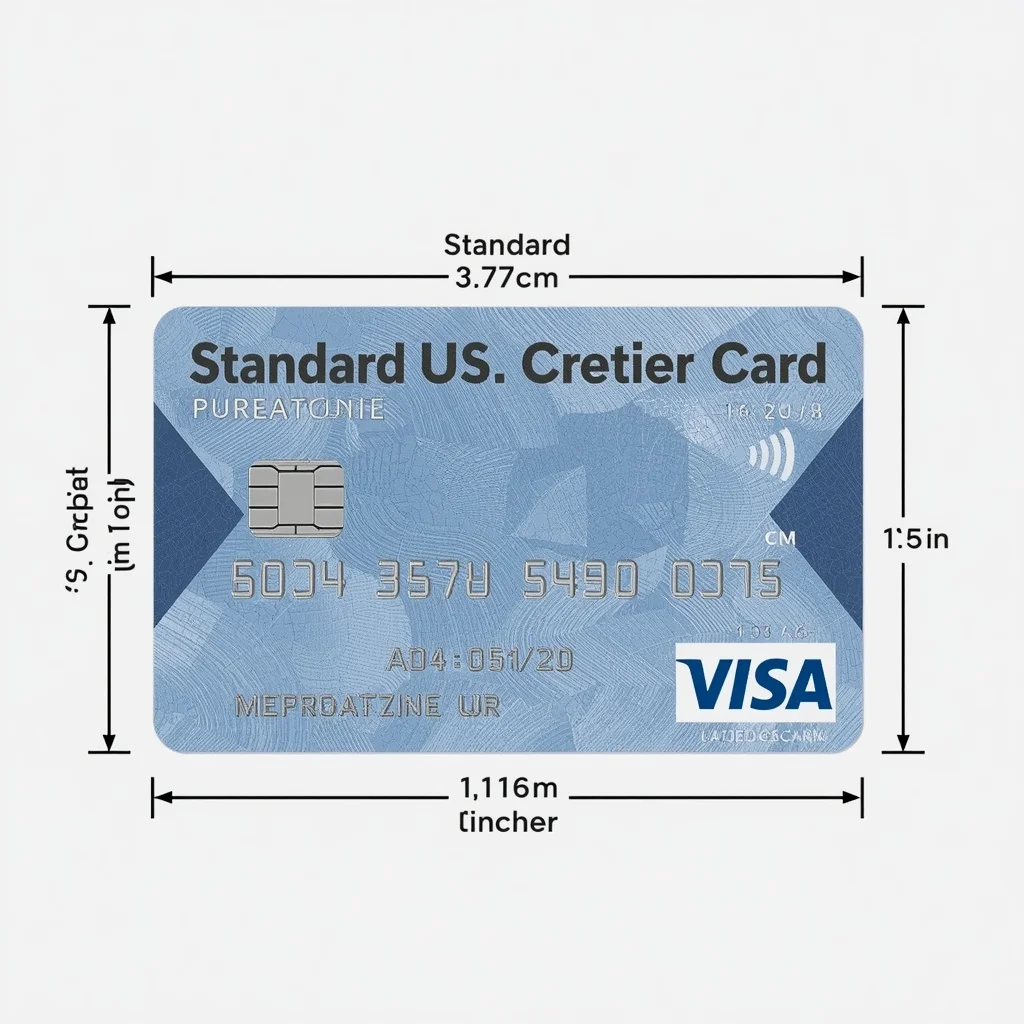
A standard U.S. credit card measures approximately 3.375 inches wide and 2.125 inches tall.
Three inches is therefore slightly shorter than the card’s long edge.
The difference is:
3.375 − 3 = 0.375 inch
In centimeters, the card’s width is about 8.57 cm, while the three-inch measurement is 7.62 cm.
That makes the difference approximately 0.95 cm.
So, if you have a standard credit card nearby, its width provides a useful reference. The distance you are visualizing would stop a little before the card’s full width.
Comparing It With a Baseball
A regulation baseball has a diameter of approximately 2.86 to 2.94 inches, depending on the exact construction and measurement.
That means a three-inch line is slightly longer than the diameter of a baseball.
The difference is small, generally around a tenth of an inch or less.
This comparison works well because a baseball is a familiar object with a compact, rounded shape. However, remember that the ball’s circumference and diameter are different measurements.
A baseball’s circumference is much larger than 3 inches, while its diameter is close to this length.
Comparing It With a Golf Ball
A standard golf ball has a diameter of at least 1.68 inches.
Two golf balls placed directly side by side would span approximately:
1.68 + 1.68 = 3.36 inches
Therefore, three inches is slightly shorter than the combined diameter of two standard golf balls.
This gives you another simple visualization. Imagine two golf balls touching each other. The distance across both balls would exceed three inches by about 0.36 inch.
Comparing It With a Sticky Note
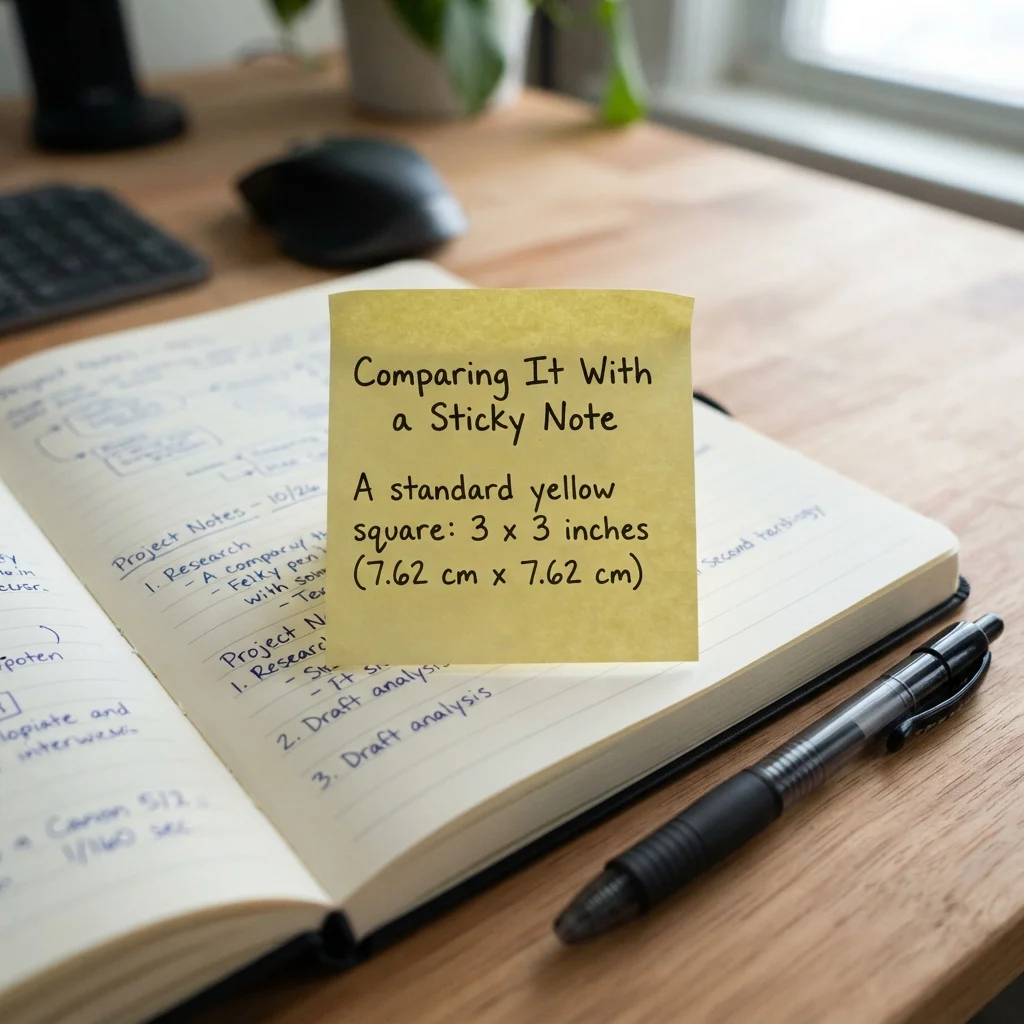
Small square sticky notes often come in dimensions of 3 by 3 inches.
When you have a sticky note with those dimensions, each side gives you a direct reference for the length.
A 3-by-3-inch square has:
- Length: 3 inches
- Width: 3 inches
- Area: 9 square inches
This also demonstrates why length and area should not be confused. The side measures three inches, while the entire surface covers nine square inches.
Sticky-note sizes vary by manufacturer, so check the packaging if you need a precise 3-inch square.
Comparing It With a Smartphone
Most modern smartphones are much longer than three inches.
Many phones have overall heights around 5.5 to 7 inches, depending on the model. That means a three-inch section could represent roughly half the height of a typical smartphone.
However, smartphones come in many different sizes, so a particular phone should not serve as an exact reference.
For a rough mental picture, imagine marking a line that starts at the bottom of a phone and extends upward about halfway along its body. On many phones, that distance would be close to three inches.
Comparing 3 Inches With 6 Inches
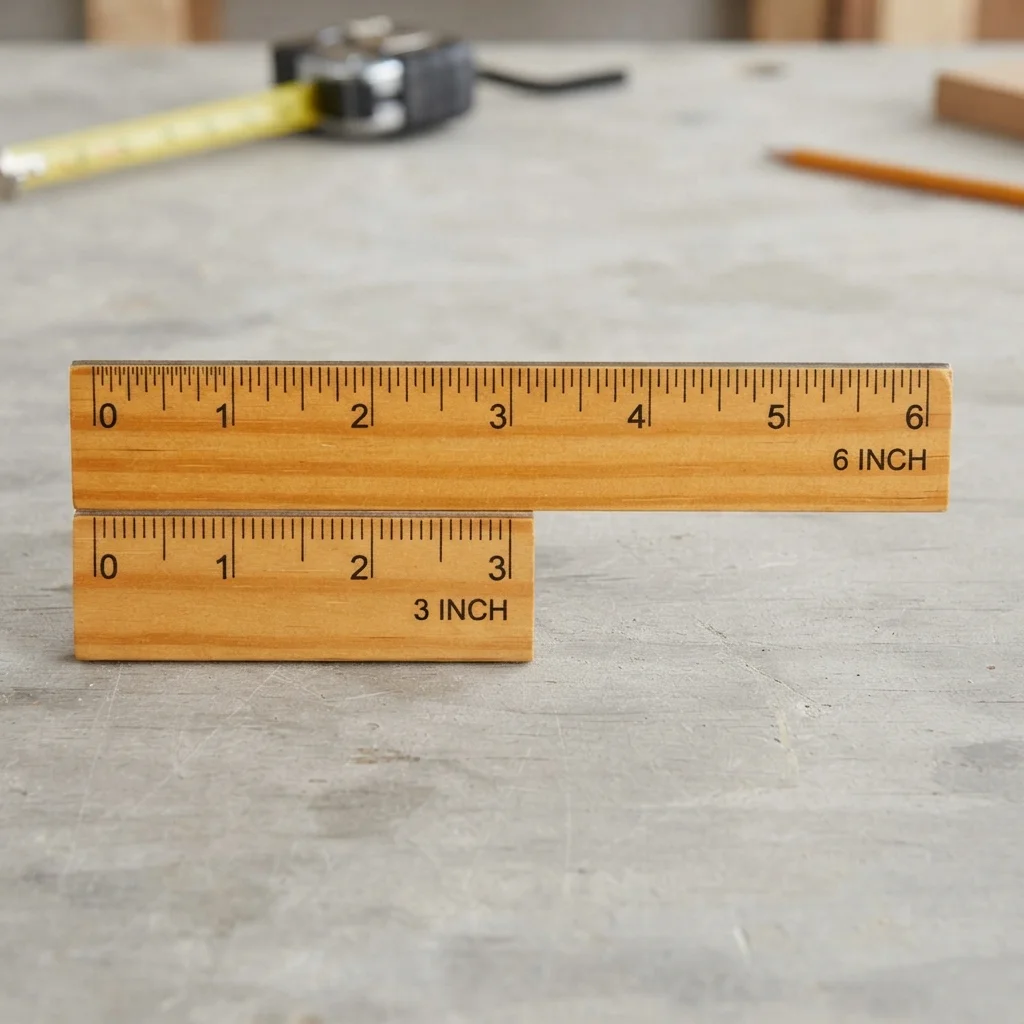
Three inches is exactly half of six inches.
This relationship makes the measurement easy to visualize if you already understand the size of six inches.
For example:
6 inches ÷ 2 = 3 inches
Likewise:
3 inches × 2 = 6 inches
This means two equal sections of three inches create a total length of six inches.
Comparing It With One Foot
One foot contains 12 inches, so the relationship is straightforward:
3 inches = ¼ foot
A 12-inch ruler divided into four equal sections gives four pieces, each measuring three inches.
This also means:
- 3 inches = 25% of a foot
- 6 inches = 50% of a foot
- 9 inches = 75% of a foot
- 12 inches = 100% of a foot
Thinking in percentages can make the measurement easier to understand.
How Three Inches Compares With 10 Centimeters
Ten centimeters is a convenient metric reference because it is a round number.
Three inches equals 7.62 cm.
Therefore:
10 − 7.62 = 2.38 cm
So the three-inch length is 2.38 cm shorter than 10 cm.
Another way to look at it is that 3 inches represents about 76.2% of 10 centimeters.
This comparison can help people who normally use the metric system visualize an inch-based measurement.
Three Inches in Fractions and Decimals
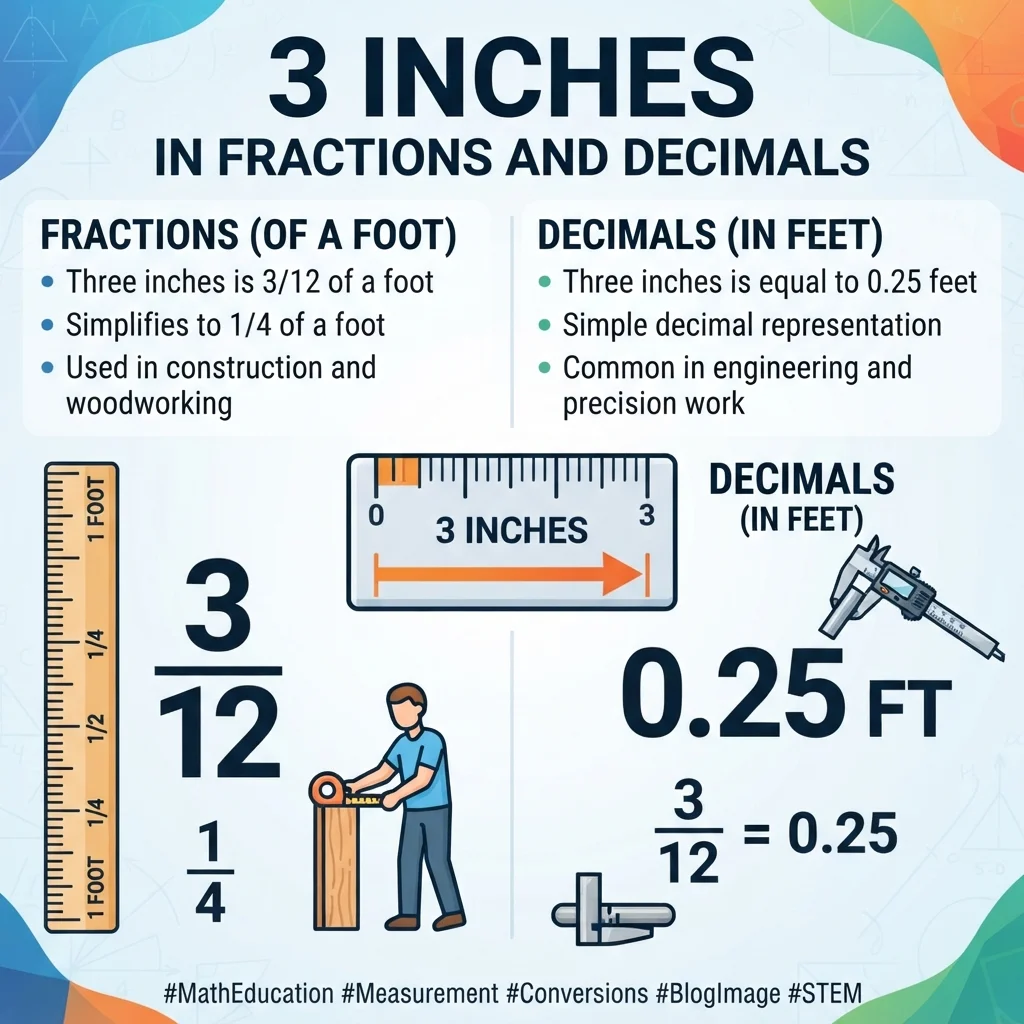
The measurement can be expressed in several mathematical forms.
In relation to a foot:
3 inches = ¼ foot
In decimal form:
3 inches = 0.25 feet
In relation to a yard:
3 inches = 1/12 yard
Because one yard contains 36 inches:
3 ÷ 36 = 0.0833 yard
So the same distance can appear as a fraction or decimal depending on the calculation you are doing.
How to Estimate the Length Without a Ruler
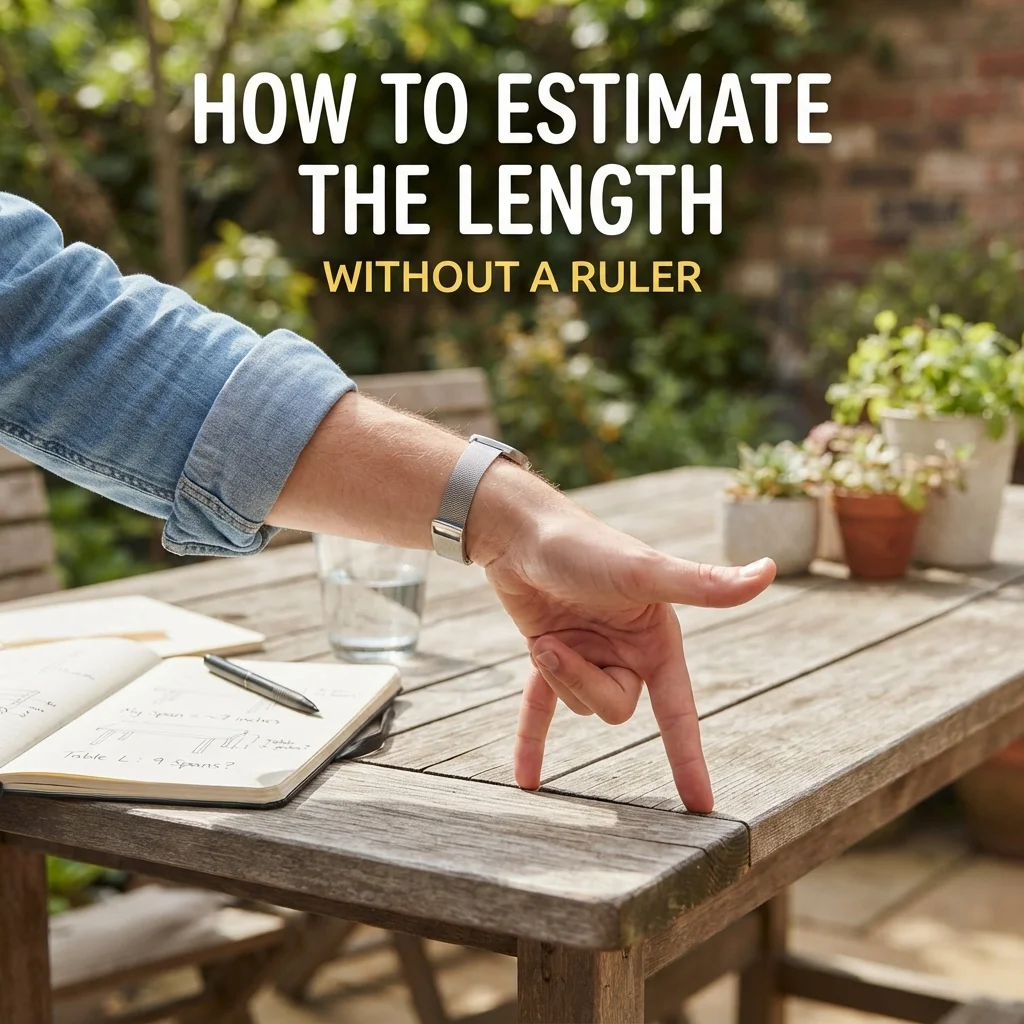
You can make a rough estimate using familiar objects if you do not have a ruler.
A U.S. dollar bill is particularly useful. Its long side measures about 6.14 inches, so half its length comes to approximately 3.07 inches.
A credit card provides another reference. Its long edge measures about 3.375 inches, making it slightly longer than the target measurement.
A baseball can also help because its diameter falls close to three inches.
These methods provide estimates rather than guaranteed exact measurements. For construction, engineering, crafting, or other precision work, use a ruler or measuring tape.
Three Inches in Everyday Applications
A three-inch measurement can appear in many different areas.
Crafting

Crafters often work with small pieces of paper, fabric, ribbon, wood, and other materials. A three-inch section can work for labels, decorative pieces, small templates, and patches.
Sewing

Three inches can be relevant when creating hems, borders, fabric sections, or pattern pieces. A measuring tape gives better accuracy when working with flexible materials.
Home Projects

Small hardware, trim pieces, spacing, and other components can have dimensions around three inches. Always follow the product specifications when exact measurements affect installation.
Technology

Small electronic accessories and components may use inch-based dimensions. Understanding the length helps when checking whether an item will fit within a specific space.
Packaging

Small boxes, labels, stickers, and product components can use measurements around three inches. Knowing the exact equivalent in centimeters can make international sizing easier to understand.
Three Inches vs. Three Square Inches
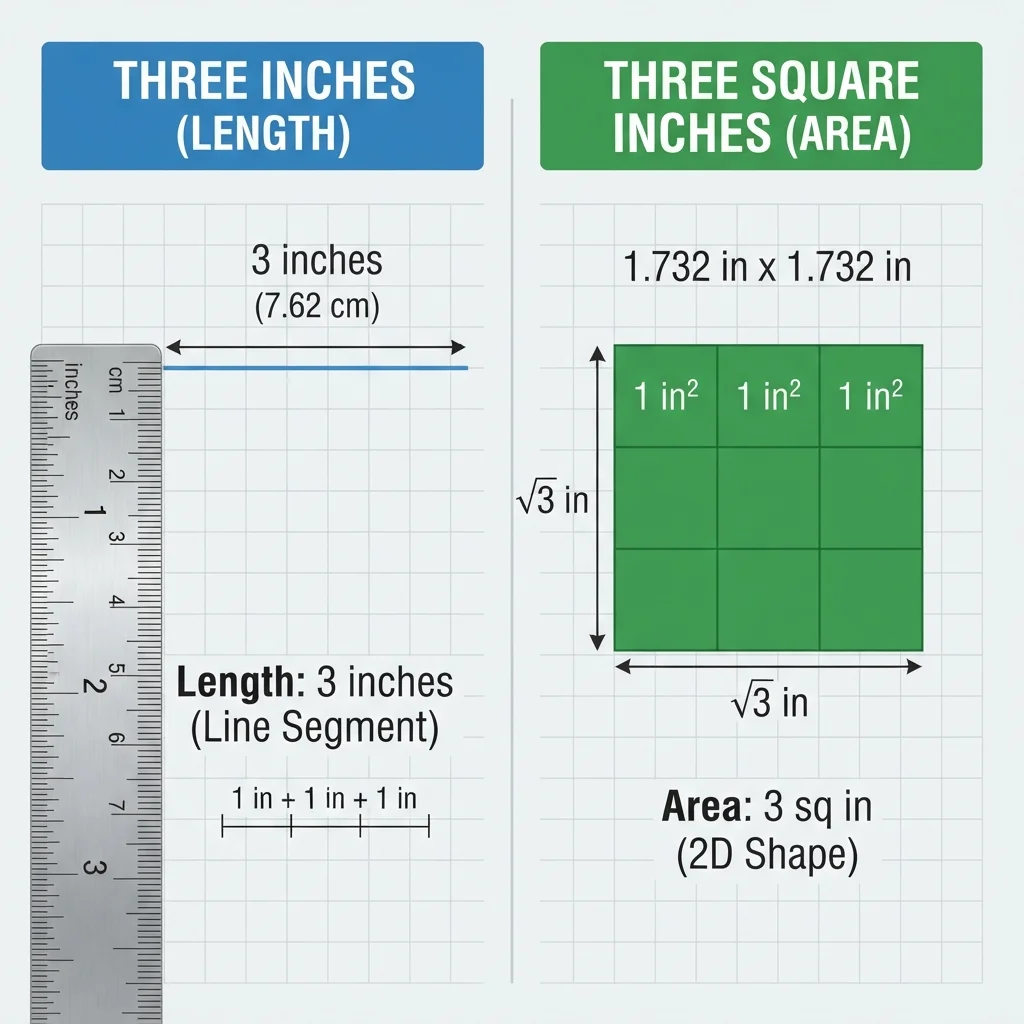
These terms describe different things.
Three inches measures length.
Three square inches measures area.
For example, a rectangle measuring 1 inch by 3 inches has an area of:
1 × 3 = 3 square inches
Its longest side still measures only three inches.
By contrast, a square measuring 3 inches by 3 inches has an area of:
3 × 3 = 9 square inches
Understanding this difference prevents confusion when reading product dimensions or project instructions.
Quick Comparison Table
| Familiar Reference | Approximate Relationship |
|---|---|
| U.S. dollar bill | Almost half its length |
| Standard credit card | Slightly shorter than its width |
| Baseball | Slightly longer than its diameter |
| Golf ball | Less than two diameters |
| 3-inch sticky note | Exactly one side |
| 6-inch length | Exactly half |
| 12-inch ruler | Exactly one-quarter |
| 10 cm | 2.38 cm longer |
These comparisons give you several ways to visualize the same physical distance.
Frequently Asked Questions
What is 3 inches in centimeters?
Three inches equals 7.62 centimeters.
What is 3 inches in millimeters?
The measurement equals 76.2 millimeters.
How many feet are in 3 inches?
Three inches equals 0.25 feet, or exactly one-quarter of a foot.
Is 3 inches half of 6 inches?
Yes. Three inches is exactly half of six inches.
Is 3 inches one-quarter of a foot?
Yes. Since a foot contains 12 inches, three inches represents one-quarter of a foot.
What household item is close to 3 inches?
A U.S. dollar bill provides a useful comparison because half its 6.14-inch length is approximately 3.07 inches. A standard credit card is also close, although its width is slightly larger.
Is a baseball about 3 inches wide?
A regulation baseball has a diameter of roughly 2.86 to 2.94 inches, so its diameter is close to three inches.
Is 3 inches the same as 7.5 cm?
Not exactly. Three inches equals 7.62 cm, which is 0.12 cm longer than 7.5 cm.
Can I measure this length without a ruler?
You can estimate it with familiar objects such as a dollar bill, credit card, or baseball. For precise work, use a ruler or measuring tape.
Conclusion
Three inches is a compact measurement equal to 7.62 cm, 76.2 mm, 0.25 feet, and 0.0833 yards. Its relationship with a foot makes it particularly easy to remember: three inches is exactly one-quarter of a foot.
For everyday visualization, half the length of a U.S. dollar bill comes very close, while a standard credit card is slightly wider. A baseball’s diameter also provides a useful comparison.
Whether you are working on a craft project, checking product dimensions, measuring household objects, or simply trying to understand an inch-based measurement, these comparisons make the size easier to picture. When precision matters, however, a ruler or measuring tape remains the most reliable option.

Lucas Morgan is a passionate writer who enjoys creating helpful, engaging, and practical content for readers. He focuses on sharing clear ideas, useful insights, and creative inspiration through every article.


