

If you’re wondering how big is 6mm, this is a relatively small measurement equal to 0.6 centimeters or approximately 0.236 inches. In millimeters, the measurement is simply 6 mm, while in meters it is 0.006 m.
Millimeters are commonly used for small objects and precise measurements. You may see this unit when shopping for jewelry, screws, drill bits, beads, wires, tiles, glass, and other products where small differences in size matter.
Because millimeters are much smaller than inches or feet, it can sometimes be difficult to picture their actual size. Converting the measurement into other units and comparing it with familiar objects makes it easier to understand.
6mm Measurement at a Glance
Here are the main conversions:
| Unit | Equivalent |
|---|---|
| Millimeters | 6 mm |
| Centimeters | 0.6 cm |
| Inches | 0.2362 in |
| Feet | 0.0197 ft |
| Meters | 0.006 m |
| Micrometers | 6,000 µm |
For a quick everyday reference, 6 mm is a little more than half a centimeter.
6mm in Centimeters

There are 10 millimeters in one centimeter. To convert this measurement to centimeters, divide by 10:
6 ÷ 10 = 0.6 cm
Therefore, 6 mm equals 0.6 cm.
This means the length is slightly more than half of a centimeter. If you are not familiar with millimeters, thinking of the measurement as 0.6 cm can make it easier to visualize.
A standard centimeter is divided into ten millimeter sections, so six of those small sections equal 6 mm.
6mm in Inches
One inch contains exactly 25.4 millimeters.
To convert:
6 ÷ 25.4 = 0.2362 inches
So the equivalent is approximately 0.236 inches.
For everyday purposes, you can round this to about 0.24 inches. This is very close to one-quarter of an inch.
In fact, one-quarter inch is 6.35 mm, meaning 6 mm is only 0.35 mm smaller.
6mm in Meters

One meter contains 1,000 millimeters.
The conversion is:
6 ÷ 1,000 = 0.006 meters
Therefore:
6 mm = 0.006 m
Meters are generally not used to describe objects this small, but this conversion shows the relationship between millimeters and larger metric units.
6mm in Feet
There are 304.8 millimeters in one foot.
Using the conversion:
6 ÷ 304.8 = 0.0197 feet
Therefore, the measurement is approximately 0.0197 feet.
Although feet are not normally used for objects this small, this conversion can be helpful when comparing measurements from different systems.
What Does 6mm Look Like?

A numerical measurement can be difficult to picture without a physical reference.
Six millimeters is:
- Less than 1 centimeter
- Less than one-quarter of an inch
- Slightly more than half a centimeter
- 60% of a centimeter
- A small distance on a standard metric ruler
The easiest way to see this size is with a ruler that has millimeter markings. From the 0 mark to the sixth small marking is exactly 6 mm.
Is 6mm Considered Small?
Yes, 6mm is generally considered a small measurement.
To put it into perspective, a full centimeter is 10mm. That means 6mm represents 60% of one centimeter.
It is also less than a quarter of an inch, which is 6.35mm.
However, whether this size is considered small or large depends on the object being measured. Six millimeters can be significant for jewelry or hardware but extremely small when discussing furniture or room dimensions.
Comparing 5mm, 6mm, and 7mm
Looking at nearby measurements makes small differences easier to understand.
| Measurement | Centimeters | Inches |
|---|---|---|
| 5 mm | 0.5 cm | 0.197 in |
| 6 mm | 0.6 cm | 0.236 in |
| 7 mm | 0.7 cm | 0.276 in |
| 8 mm | 0.8 cm | 0.315 in |
| 10 mm | 1 cm | 0.394 in |
The difference between 5mm and 6mm is only 1mm, but that small difference can matter when working with precision components.
6mm Compared With 1 Centimeter

One centimeter is equal to 10mm.
That means a 6mm measurement is 4mm shorter than 1 centimeter.
You can visualize it on a ruler like this:
0 mm — 1 — 2 — 3 — 4 — 5 — 6 — 7 — 8 — 9 — 10 mm
The distance from zero to six is the required measurement, while the remaining distance to 1cm is 4mm.
This is one of the easiest ways to understand its size.
Everyday Objects Around 6mm
Several small objects can provide a rough visual reference. These examples are approximate because everyday objects are not necessarily manufactured to exactly 6mm.
Small Beads

Six-millimeter beads are common in jewelry and craft projects. A round bead with a 6mm diameter would measure 6mm across its widest point.
This size is often used for bracelets, necklaces, decorative crafts, and other accessories.
Jewelry Components

Small gemstones, beads, charms, and other jewelry parts may have dimensions close to this measurement.
When shopping for jewelry, even a difference of 1 or 2mm can noticeably change the appearance of an item.
Screws and Hardware
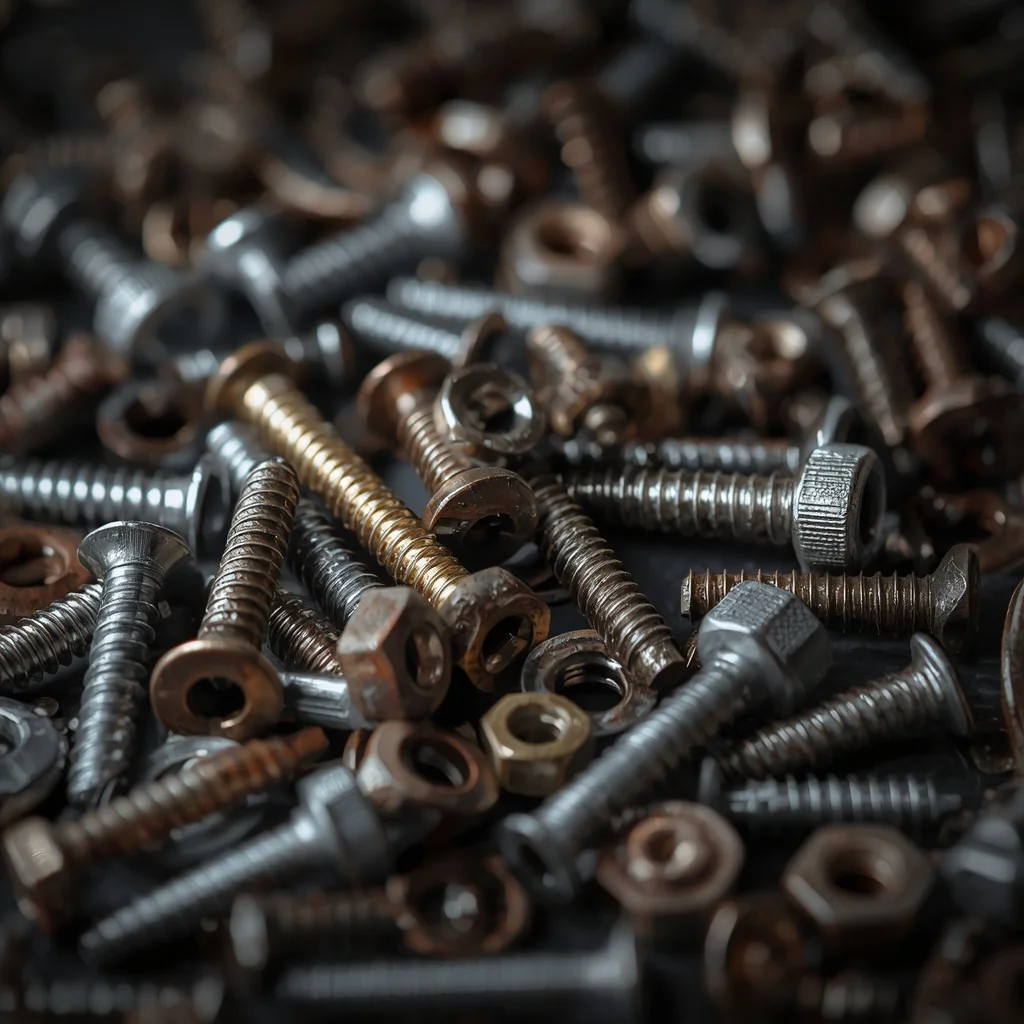
Small screws, nuts, bolts, washers, and other hardware are frequently described using millimeters.
A 6mm specification may refer to the diameter, width, or another specific dimension rather than the entire length of the item. Always check the manufacturer’s measurements before choosing a component.
Drill Bits

A 6mm drill bit has a cutting diameter of 6mm.
This is a common size for drilling holes in materials such as wood, plastic, and certain metals, depending on the tool and application.
Wires and Cables

Some wires, cables, and electrical components can also have dimensions measured in millimeters. However, the stated measurement may refer to the diameter, thickness, insulation, or another part of the product.
Always check the product specifications to determine exactly what the measurement describes.
Can You See 6mm on a Ruler?
Yes. A metric ruler is one of the easiest ways to visualize this size.
Most metric rulers divide each centimeter into ten smaller sections. Each small section represents 1mm.
Therefore, starting at zero:
- 1 small mark = 1mm
- 2 small marks = 2mm
- 3 small marks = 3mm
- 4 small marks = 4mm
- 5 small marks = 5mm
- 6 small marks = 6mm
This makes a ruler much more useful than trying to estimate the size by looking at an object.
How to Measure 6mm Accurately

If you need to measure an object precisely, use a ruler with millimeter markings or a digital caliper.
Using a Metric Ruler
Place one end of the object at the ruler’s zero mark. Keep the object straight and look at where the opposite end reaches.
If it reaches the sixth millimeter mark, the measured distance is 6mm.
Make sure you begin at the 0 mark rather than simply placing the object against the physical edge of the ruler. Some rulers have a small gap before the first marking.
Using a Digital Caliper
A digital caliper is more appropriate when you need high precision.
It can measure small dimensions such as:
- Diameter
- Thickness
- Width
- Depth
- Inside dimensions
For engineering, mechanical work, jewelry, or other precision applications, a caliper can provide a more reliable result than visual estimation.
How Thick Is 6mm?
A material that is 6mm thick measures 6 millimeters from one surface to the opposite surface.
This type of measurement is commonly used for materials such as:
- Glass
- Wood
- Plastic
- Metal
- Rubber
- Foam
- Tiles
- Craft materials
The appearance of a 6mm thickness depends on the material. Six millimeters of glass, for example, may look very different from six millimeters of foam because the materials have different properties.
Length, Width, Thickness, and Diameter
When you see a product described as 6mm, it is important to determine which dimension the number represents.
For example:
- A bead may have a 6mm diameter.
- A sheet of material may be 6mm thick.
- A screw may have a 6mm diameter.
- A piece of wire may have a 6mm diameter.
- A small object may be 6mm long.
The number alone does not tell you which dimension is being measured.
Always check the product’s dimensions or measurement diagram before making a purchase.
6mm Compared With a Quarter Inch

This is one of the most useful comparisons when switching between metric and imperial measurements.
One-quarter inch equals:
6.35mm
The difference between 6mm and ¼ inch is only:
6.35 − 6 = 0.35mm
Therefore, these two measurements are very close, but they are not exactly the same.
If you need a precise fit, don’t automatically substitute one for the other.
How Many 6mm Sections Fit Into 1cm?
One centimeter equals 10mm.
If each section is 6mm, you can fit one complete 6mm section into 1cm, with 4mm remaining.
Two sections would equal:
6 + 6 = 12mm
That is 2mm longer than one centimeter.
This simple comparison helps show that 6mm is more than half a centimeter but not as large as a full centimeter.
How Many 6mm Sections Fit Into 1 Inch?
One inch is 25.4mm.
Dividing by 6:
25.4 ÷ 6 ≈ 4.23
So approximately four complete 6mm sections fit into one inch.
Four sections equal:
4 × 6 = 24mm
That leaves 1.4mm before reaching a full inch.
Is 6mm Big Enough to Notice?
Yes, depending on what you are looking at.
Six millimeters is small, but it can be clearly visible when placed against a contrasting background or measured with a ruler.
For example, a 6mm bead can be easily seen as a jewelry component. A 6mm gap in a piece of furniture or construction material can also be significant.
In larger objects, however, a 6mm difference may be difficult to notice without measuring tools.
Why Millimeters Are Useful for Small Measurements

Millimeters provide a convenient way to describe small dimensions without using complicated decimal numbers.
For example, instead of saying an object is 0.6cm wide, it is often simpler to say it is 6mm wide.
This is why millimeters are commonly used for:
- Jewelry
- Engineering parts
- Screws and fasteners
- Drill bits
- Electronics
- Hardware
- Medical equipment
- Craft supplies
- Material thickness
Using millimeters also makes it easier to describe small differences accurately.
Quick Conversion Chart
| Unit | 6mm Equivalent |
|---|---|
| Millimeters | 6 mm |
| Centimeters | 0.6 cm |
| Inches | 0.2362 in |
| Feet | 0.0197 ft |
| Meters | 0.006 m |
| Micrometers | 6,000 µm |
The two conversions most people need are:
6mm = 0.6cm
6mm ≈ 0.236 inches
For a simple everyday estimate, you can round the inch measurement to 0.24 inches.
Frequently Asked Questions
Is 6mm the same as 0.6cm?
Yes. There are 10mm in a centimeter, so 6mm equals 0.6cm.
How many inches is 6mm?
Six millimeters equals approximately 0.2362 inches.
Is 6mm close to 1/4 inch?
Yes. One-quarter inch is 6.35mm, so 6mm is just 0.35mm smaller.
Is 6mm a small size?
Yes. It is less than 1cm and less than one-quarter of an inch, making it a relatively small measurement.
What does 6mm look like on a ruler?
It is the distance between the 0 mark and the sixth millimeter marking on a metric ruler.
What objects are commonly measured in millimeters?
Small hardware, jewelry, drill bits, beads, wires, electronics, and material thicknesses are commonly specified in millimeters.
Can I estimate this size with my finger?
You can make a rough estimate, but fingers vary in size. A ruler or caliper is much more accurate.
How many millimeters are in 1 centimeter?
There are 10 millimeters in 1 centimeter.
Conclusion
Six millimeters is a small but commonly used measurement. It equals 0.6 centimeters, approximately 0.236 inches, and 0.006 meters. For an easy visual reference, it is a little more than half a centimeter and just under one-quarter of an inch.
This size appears frequently in jewelry, hardware, drill bits, craft supplies, wires, and material thicknesses. Because even a small difference can matter when working with precision parts, use a ruler with millimeter markings or a digital caliper whenever an accurate measurement is required.

Lucas Morgan is a passionate writer who enjoys creating helpful, engaging, and practical content for readers. He focuses on sharing clear ideas, useful insights, and creative inspiration through every article.


