

A Nether portal is one of the most useful structures in Minecraft. It allows players to travel between the Overworld and the Nether, where they can collect rare resources, explore dangerous biomes, and find important structures. However, before you build one, you need to know the correct Nether portal dimensions.
Minecraft allows several portal sizes. The smallest working frame measures 4 blocks wide and 5 blocks high. The largest standard frame measures 23 blocks wide and 23 blocks high. You can also build different rectangular sizes between these limits.
This guide explains the minimum and maximum portal dimensions, the number of obsidian blocks required, interior opening sizes, and simple building examples. It also covers common mistakes that can prevent a portal from activating.
Quick Overview of Nether Portal Dimensions
A Nether portal uses a vertical rectangular frame made from obsidian. The game accepts different frame sizes as long as they follow its minimum and maximum dimensions.
Here are the essential measurements:
| Portal measurement | Size |
|---|---|
| Minimum frame width | 4 blocks |
| Minimum frame height | 5 blocks |
| Maximum frame width | 23 blocks |
| Maximum frame height | 23 blocks |
| Minimum interior width | 2 blocks |
| Minimum interior height | 3 blocks |
| Maximum interior width | 21 blocks |
| Maximum interior height | 21 blocks |
These measurements count the outside obsidian frame. The open space inside the frame is smaller because the obsidian border takes up one block along each side.
The four corner blocks are optional. Therefore, you can build a basic working portal with fewer obsidian blocks than a complete rectangular frame requires.
Minimum Nether Portal Size
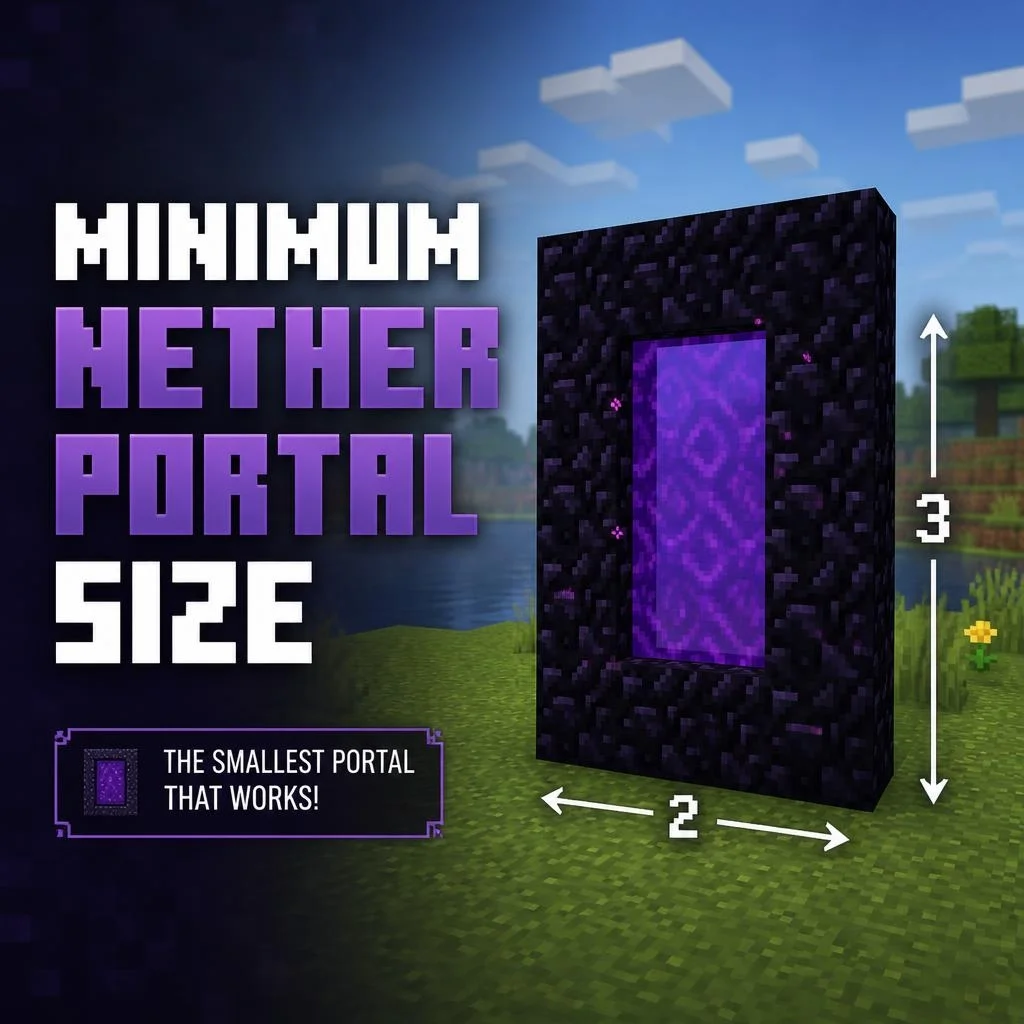
The smallest working Nether portal has an outside frame measuring 4 blocks wide by 5 blocks high.
Its interior opening measures 2 blocks wide and 3 blocks high. This opening gives players enough space to walk through the portal.
You need at least 10 obsidian blocks when you leave the four corners empty. However, you need 14 obsidian blocks if you build the complete rectangular frame with all four corners.
The minimum portal is popular in Survival mode because it saves obsidian. Players can activate it with flint and steel or another suitable source of fire.
Minimum Portal Measurements
| Part | Measurement |
|---|---|
| Outside width | 4 blocks |
| Outside height | 5 blocks |
| Interior width | 2 blocks |
| Interior height | 3 blocks |
| Obsidian without corners | 10 blocks |
| Obsidian with corners | 14 blocks |
For a basic portal, this is usually all you need. A larger frame does not make travel faster, so the minimum size works well for ordinary gameplay.
Maximum Nether Portal Size
Minecraft also supports much larger Nether portals. The maximum standard frame measures 23 blocks wide by 23 blocks high.
After subtracting the obsidian border, the interior opening measures 21 blocks wide and 21 blocks high. This creates a large purple portal surface that can make an impressive entrance for a base or custom build.
A complete 23-by-23 frame requires 88 obsidian blocks. If you leave all four corners empty, you need 84 blocks instead.
Large portals are useful for decorative builds and wide entrances. However, they do not provide a faster way to travel between dimensions.
Maximum Portal Measurements
| Part | Measurement |
|---|---|
| Outside width | 23 blocks |
| Outside height | 23 blocks |
| Interior width | 21 blocks |
| Interior height | 21 blocks |
| Obsidian without corners | 84 blocks |
| Obsidian with corners | 88 blocks |
The maximum size gives builders more room to create impressive portal designs. Still, you should choose a size that fits your available space and building materials.
Standard Nether Portal Size

Most players use the minimum 4-by-5 frame because it is affordable and easy to build. It also provides enough space for normal player movement.
A standard portal with all four corners measures 4 blocks across and 5 blocks tall. Its opening measures 2 blocks across and 3 blocks tall.
You can leave the corners empty without affecting activation. This small detail saves four obsidian blocks, which can be valuable when you are starting a Survival world.
For a simple base entrance, the standard size is usually practical. You can also surround it with stone, bricks, or other decorative blocks without changing its working dimensions.
How Many Obsidian Blocks Do You Need?
The number of obsidian blocks depends on the outside width and height of your portal.
For a rectangular frame with all four corners included, use this calculation:
Obsidian blocks = (2 × width) + (2 × height) − 4
The formula removes the four corner overlaps because each corner belongs to both a horizontal and a vertical side.
If you leave the corners empty, subtract another four blocks.
Here are some common portal sizes:
| Outside frame size | Interior opening | Obsidian with corners | Obsidian without corners |
|---|---|---|---|
| 4 × 5 | 2 × 3 | 14 | 10 |
| 5 × 5 | 3 × 3 | 16 | 12 |
| 6 × 6 | 4 × 4 | 20 | 16 |
| 8 × 6 | 6 × 4 | 24 | 20 |
| 10 × 10 | 8 × 8 | 36 | 32 |
| 12 × 8 | 10 × 6 | 36 | 32 |
| 23 × 23 | 21 × 21 | 88 | 84 |
These examples show that a larger portal requires more obsidian. Therefore, plan the frame before collecting materials.
Nether Portal Dimensions in Feet and Meters
Minecraft measures structures in blocks rather than feet or meters. However, real-world conversions can help readers understand the scale.
A Minecraft block is commonly treated as approximately one meter on each side for simple size comparisons. This makes block measurements easy to visualize.
Using that approximate comparison, the minimum portal frame is about 4 meters wide and 5 meters high. The maximum frame is about 23 meters wide and 23 meters high.
| Portal size | Approximate width | Approximate height |
|---|---|---|
| Minimum | 4 m | 5 m |
| Standard | 4 m | 5 m |
| 6 × 6 frame | 6 m | 6 m |
| 10 × 10 frame | 10 m | 10 m |
| Maximum | 23 m | 23 m |
For a more familiar US measurement, these approximate conversions are useful:
- 1 meter = 3.28 feet
- 4 meters = 13.12 feet
- 5 meters = 16.40 feet
- 10 meters = 32.81 feet
- 23 meters = 75.46 feet
These are real-world visual comparisons, not additional Minecraft building requirements. In the game, count blocks to create the correct frame.
How to Build a Nether Portal
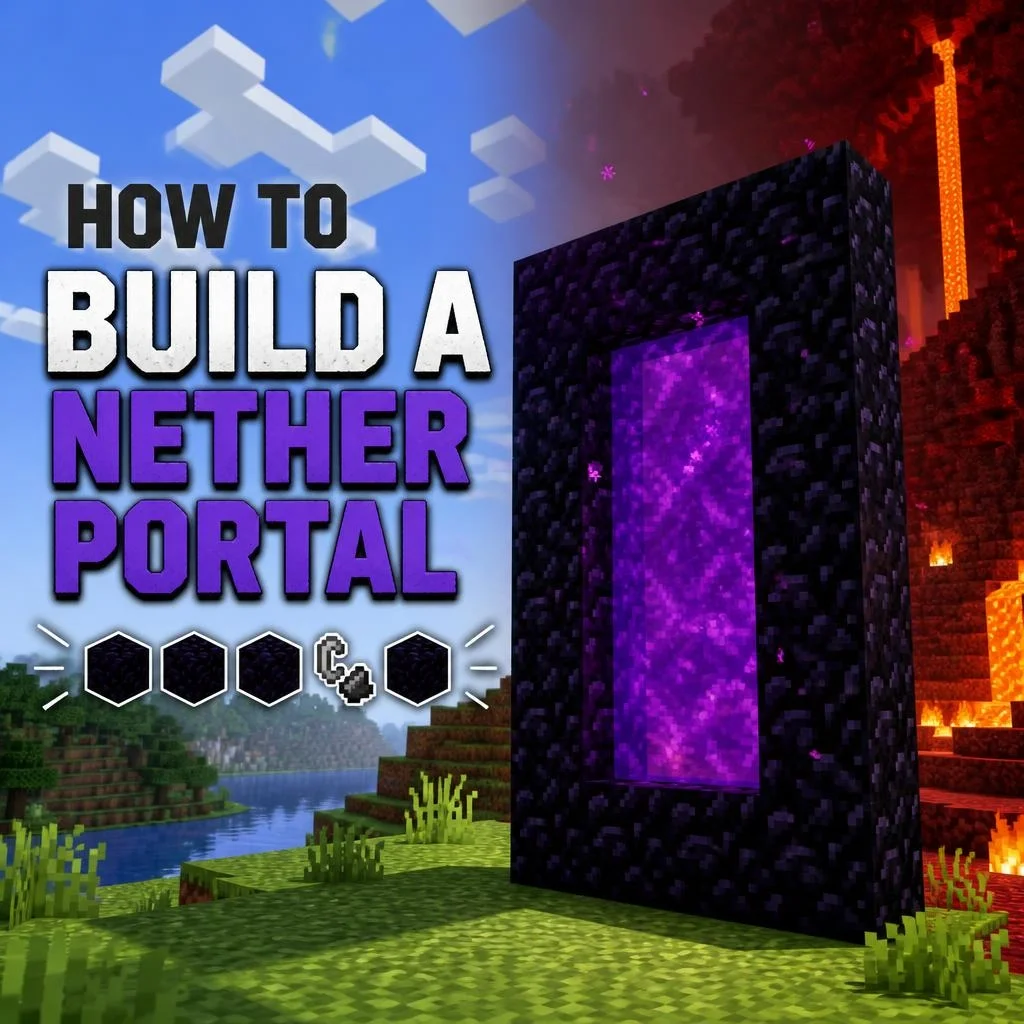
Building a Nether portal is straightforward once you know its dimensions. You only need obsidian, a suitable location, and a way to create fire inside the frame.
Follow these steps to build a standard portal.
1. Collect Obsidian
First, collect at least 10 obsidian blocks if you plan to leave the corners empty. Collect 14 blocks if you want a complete frame.
You can mine obsidian with a diamond or netherite pickaxe. Make sure you have enough blocks before starting construction.
2. Choose a Suitable Location
Find a flat area with enough open space for the frame. A standard portal needs a 4-block-wide and 5-block-high outside area.
Clear nearby blocks if they prevent you from placing the obsidian correctly. A little extra space around the structure also makes building easier.
3. Build the Bottom Row
Place two obsidian blocks in a straight horizontal line. These blocks form the bottom of the minimum frame.
If you want a complete rectangular border, place two additional corner blocks at the ends.
4. Build the Side Columns
Create two vertical obsidian columns, one on each side of the opening. Each column must reach the required height.
The minimum frame is 5 blocks tall from the bottom row to the top row.
5. Complete the Top Row
Connect the two side columns with the top obsidian blocks. You should now have a rectangular frame.
Check the measurements before lighting it. The outside dimensions must be at least 4 blocks wide and 5 blocks high.
6. Activate the Portal
Use flint and steel to create fire inside the opening. A suitable fire source activates the completed frame and fills its interior with the purple portal effect.
If the portal does not activate, check the frame shape and remove any blocks that obstruct the opening.
Can You Build a Rectangular Nether Portal?
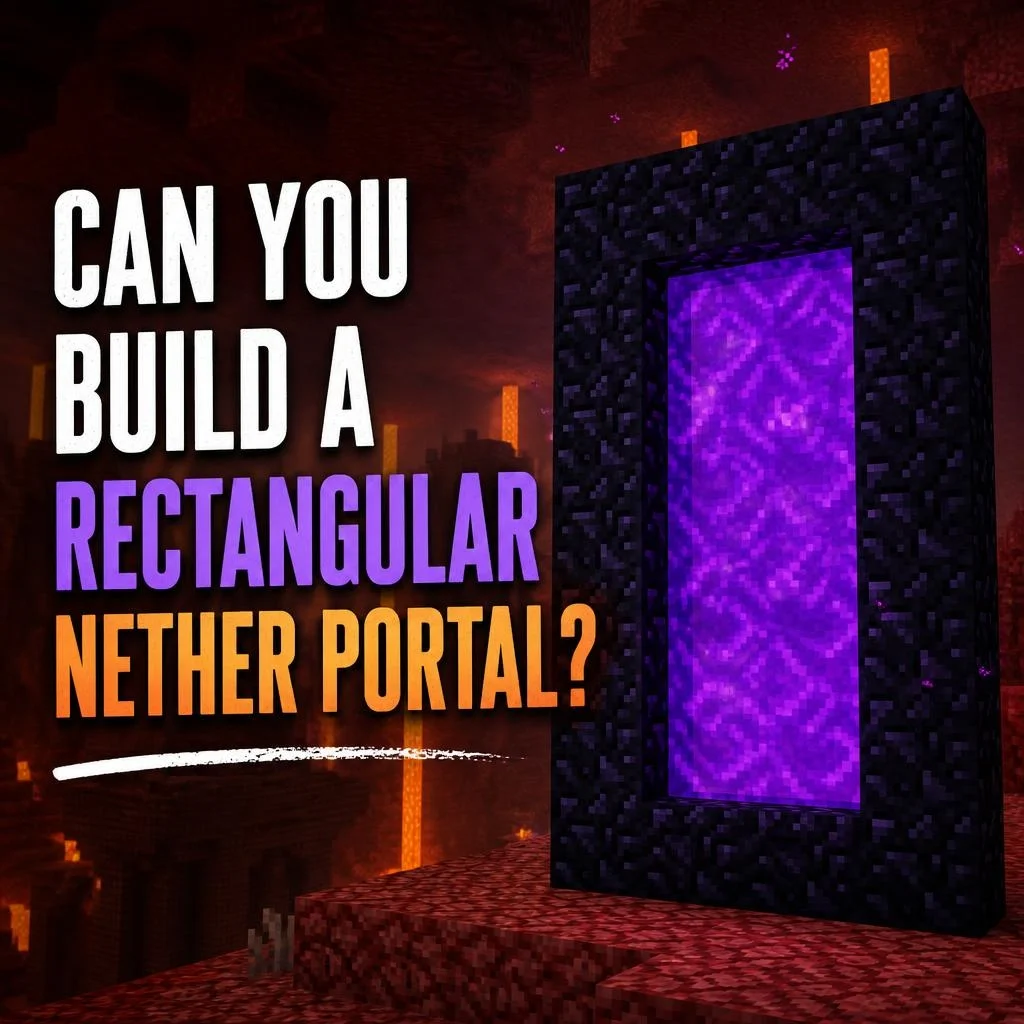
Yes. Nether portals do not have to be square.
You can build a wide, short rectangular frame or a narrow, tall one, provided that both outside dimensions stay within the permitted range.
For example, an 8-by-6 frame has an interior opening of 6 blocks wide and 4 blocks high. A 12-by-8 frame creates an opening of 10 blocks wide and 6 blocks high.
This flexibility gives builders more control over the appearance of their entrances. However, the frame must remain rectangular and vertical.
Do Nether Portal Corners Need Obsidian?

No. The four corner blocks are optional.
A minimum portal can work with only 10 obsidian blocks because the game does not require obsidian in the corners. You only need the four sides of the rectangular frame.
Some players still include all four corners because a complete border looks cleaner. Others leave them empty to save materials.
Both designs can work when the remaining frame follows the correct dimensions.
Can a Nether Portal Be Horizontal?
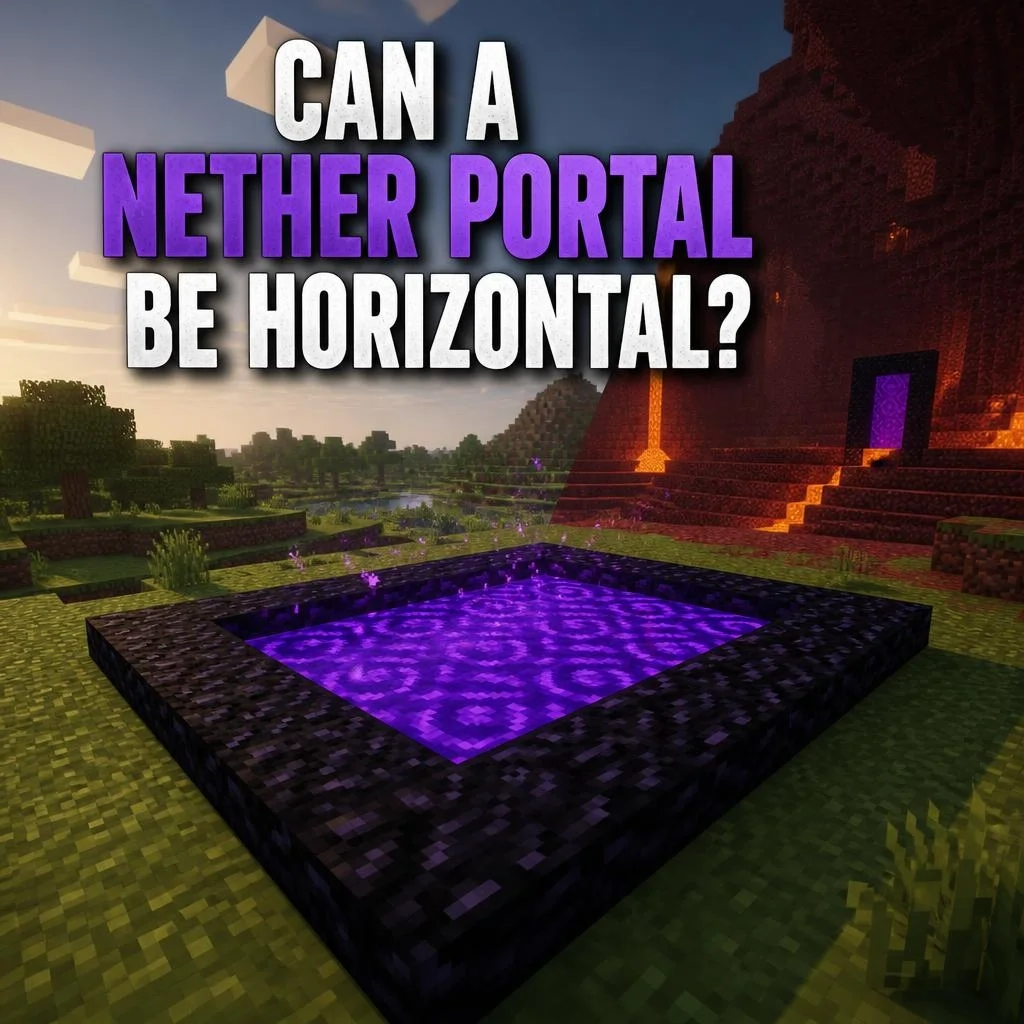
No. A normal Nether portal must stand vertically.
You cannot activate a standard Nether portal by placing its frame flat on the ground like a horizontal platform. Its obsidian frame must form an upright rectangle.
This rule applies to both small and large portal designs. Therefore, make sure the frame stands vertically before trying to light it.
Does a Bigger Nether Portal Work Better?

A larger portal does not make dimension travel faster. A player still uses the portal to travel between the Overworld and Nether, regardless of whether the opening is small or large.
However, larger portals can offer practical building advantages. They create a wider entrance and can suit large bases, castles, or custom structures.
The main difference is appearance and available opening space. If you only need a working entrance, the minimum portal is enough.
Nether Portal Dimensions in Java and Bedrock Edition
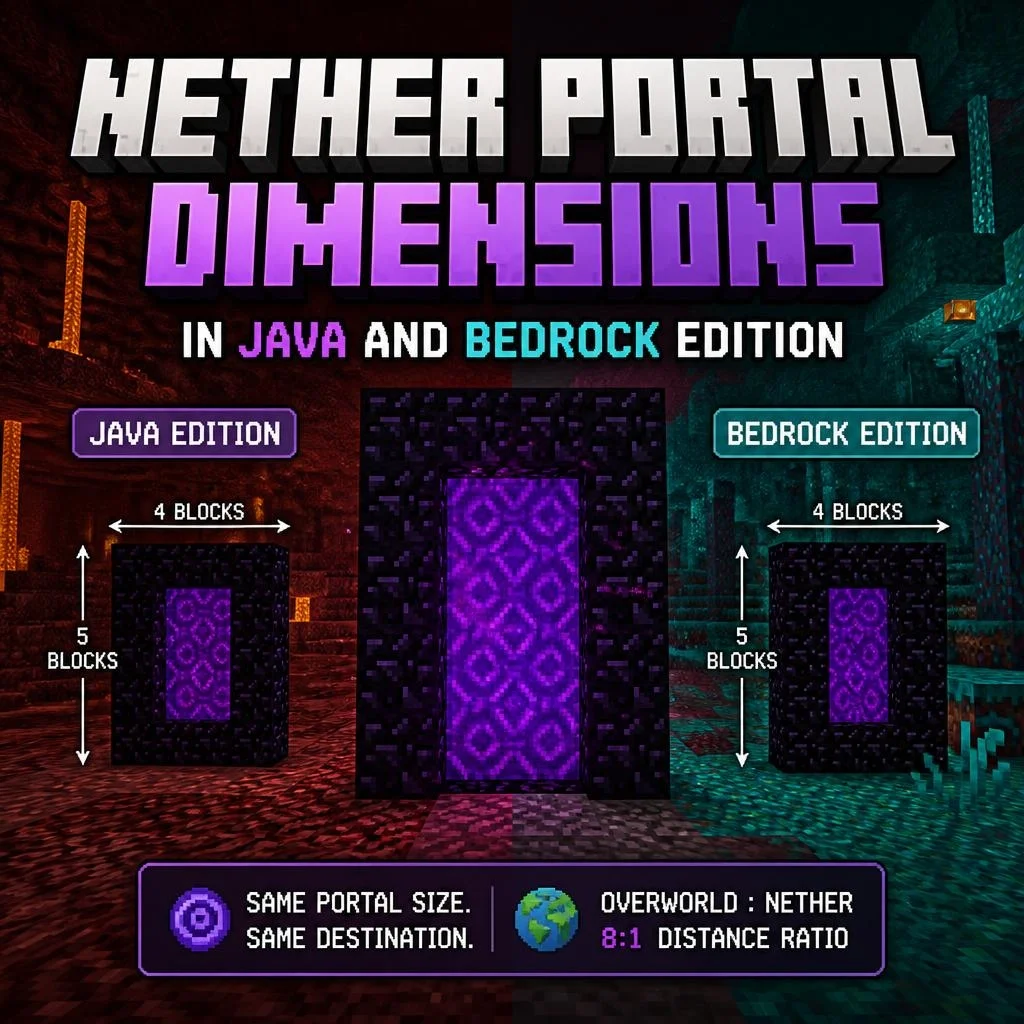
The standard minimum and maximum frame dimensions are the same in Java Edition and Bedrock Edition.
Both editions support a minimum outside frame of 4 by 5 blocks and a maximum of 23 by 23 blocks. The four corners can remain empty.
Some portal behavior and linking details can differ between editions. However, those differences do not change the basic dimensions needed to build a working frame.
Common Nether Portal Building Mistakes
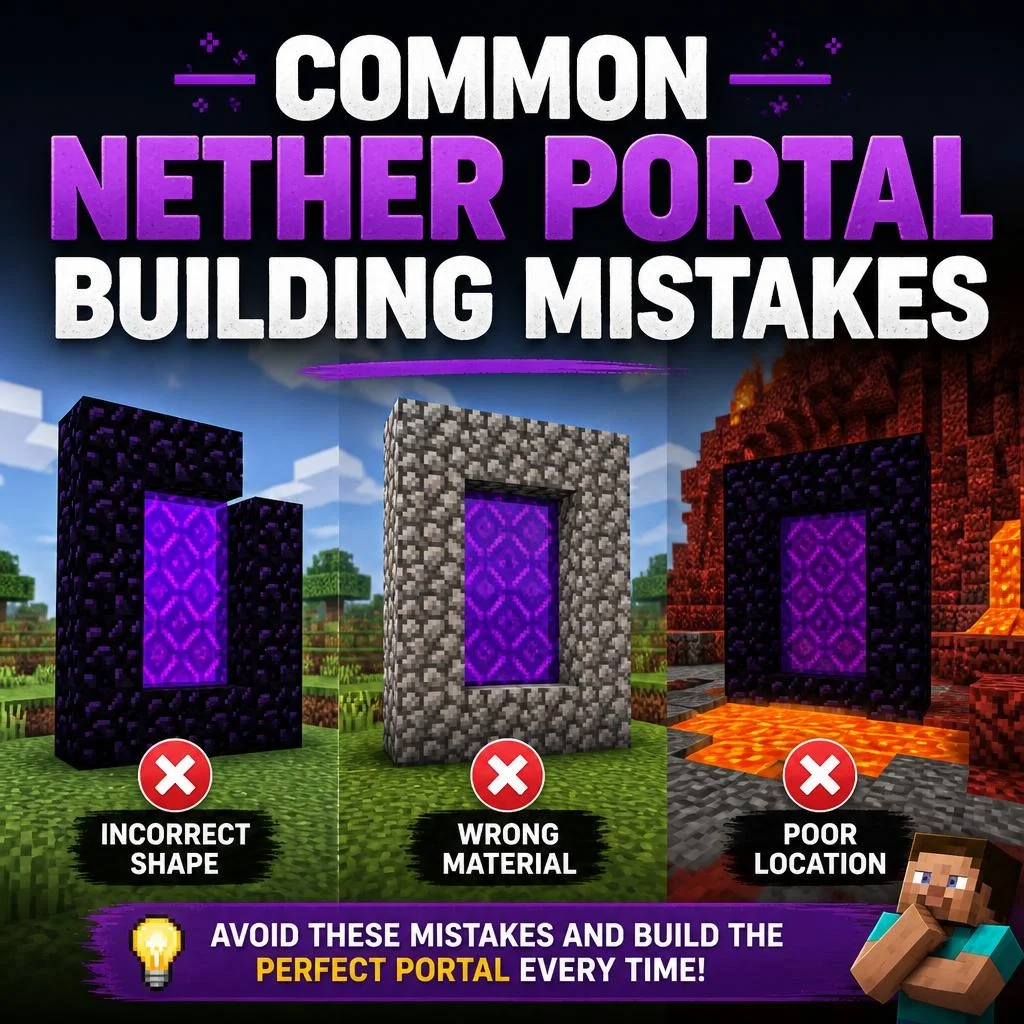
A portal may fail to activate if the frame does not meet the required structure rules. Fortunately, most building mistakes are easy to fix.
Making the Frame Too Small
A frame smaller than 4 blocks wide or 5 blocks high cannot form a standard working portal.
Always check the outside dimensions before lighting it.
Building a Frame That Is Too Large
The maximum outside width and height are 23 blocks each. A frame that exceeds the allowed size will not work as a normal Nether portal.
Using the Wrong Frame Material
Obsidian is the required frame material. Crying obsidian may look similar, but it cannot replace regular obsidian in a working frame.
Blocking the Interior
Keep the inside of the rectangular frame clear. Blocks placed inside the opening can prevent the portal from activating correctly.
Forgetting to Light the Frame
An obsidian frame does not automatically become a portal. You must create fire inside the opening to activate it.
Building the Frame Horizontally
A standard Nether portal must stand upright. A flat frame on the ground will not activate.
Frequently Asked Questions
What are the minimum Nether portal dimensions?
The minimum outside frame measures 4 blocks wide and 5 blocks high. Its interior opening measures 2 blocks wide and 3 blocks high.
What is the maximum Nether portal size?
The maximum outside frame measures 23 blocks wide and 23 blocks high. Its interior opening measures 21 by 21 blocks.
How many obsidian blocks do I need for a Nether portal?
You need 10 obsidian blocks for the minimum frame if you leave the corners empty. A complete frame with all four corners requires 14 blocks.
Do Nether portal corners need obsidian?
No. The four corners are optional. You can leave them empty and still activate the portal.
Can a Nether portal be any rectangular size?
It can use different rectangular dimensions, as long as its outside width and height each fall between 4 and 23 blocks.
Is a 5-by-5 Nether portal possible?
Yes. A 5-by-5 outside frame is valid. Its interior opening measures 3 blocks wide and 3 blocks high.
Can I make a 10-by-10 Nether portal?
Yes. A 10-by-10 frame is within the allowed size range. It creates an interior opening of 8 by 8 blocks.
Does a larger portal make travel faster?
No. A larger opening does not reduce the time required to travel between dimensions. Its main benefits are appearance and extra entrance space.
Can I use crying obsidian for a Nether portal?
No. A working Nether portal requires regular obsidian in its frame. Crying obsidian cannot replace those frame blocks.
Are Nether portal dimensions the same in Java and Bedrock?
Yes. Both editions use the same basic minimum and maximum frame dimensions for standard Nether portals.
Conclusion
Nether portal dimensions range from a minimum outside frame of 4 blocks wide by 5 blocks high to a maximum of 23 blocks wide by 23 blocks high. The smallest design creates a 2-by-3 opening and needs only 10 obsidian blocks when you leave the corners empty.
For larger builds, you can choose different rectangular sizes within the game’s limits. Just remember that the frame must stand vertically, use regular obsidian, and have a clear interior.
For most players, the minimum portal is practical and affordable. Meanwhile, larger designs offer more room for decoration and impressive entrances without changing how dimension travel works.

Lucas Morgan is a passionate writer who enjoys creating helpful, engaging, and practical content for readers. He focuses on sharing clear ideas, useful insights, and creative inspiration through every article.