
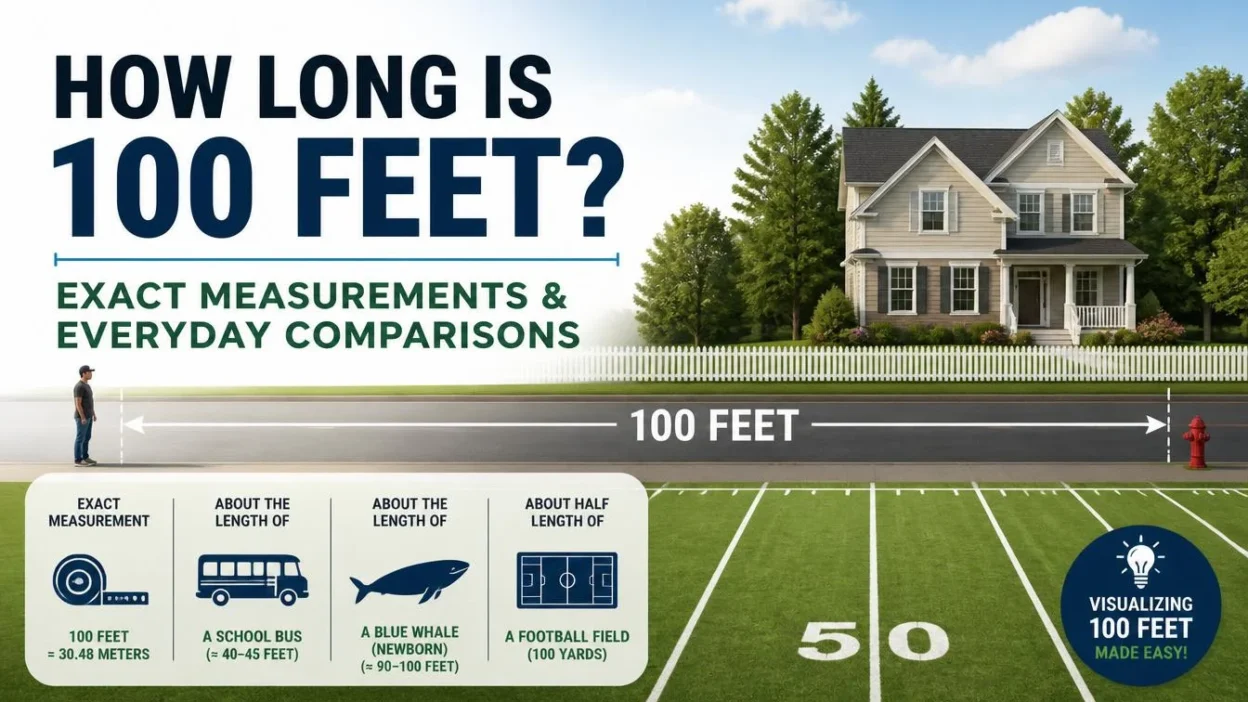
When you hear a distance of 100 feet, it can be difficult to picture the actual length. Most people are more familiar with measurements such as inches, yards, meters, or miles. Converting the distance into these units makes it much easier to understand.
100 feet equals 1,200 inches, 33.33 yards, 30.48 meters, or 3,048 centimeters. It is also equal to 0.01894 miles.
A distance of this size is long enough to span a large room, driveway, swimming pool area, or a significant portion of a sports field. However, the easiest way to visualize it is by comparing it with familiar objects and spaces.
Whether you are measuring property, planning a project, estimating a walking distance, or simply trying to understand the size of 100 feet, the conversions and comparisons below can help.
100 Feet in Inches, Yards, Meters, and Centimeters
The first step in visualizing this distance is converting it into other common units.
| Unit | Equivalent |
|---|---|
| Feet | 100 ft |
| Inches | 1,200 in |
| Yards | 33.33 yd |
| Meters | 30.48 m |
| Centimeters | 3,048 cm |
| Millimeters | 30,480 mm |
| Kilometers | 0.03048 km |
| Miles | 0.01894 mi |
The inch conversion is straightforward because one foot contains 12 inches:
100 × 12 = 1,200 inches
For yards, three feet make one yard:
100 ÷ 3 = 33.33 yards
Metric conversion is equally precise. One foot equals 0.3048 meters, so:
100 × 0.3048 = 30.48 meters
Therefore, the exact metric equivalent is 30.48 meters.
How Long Is 100 Feet in Meters?
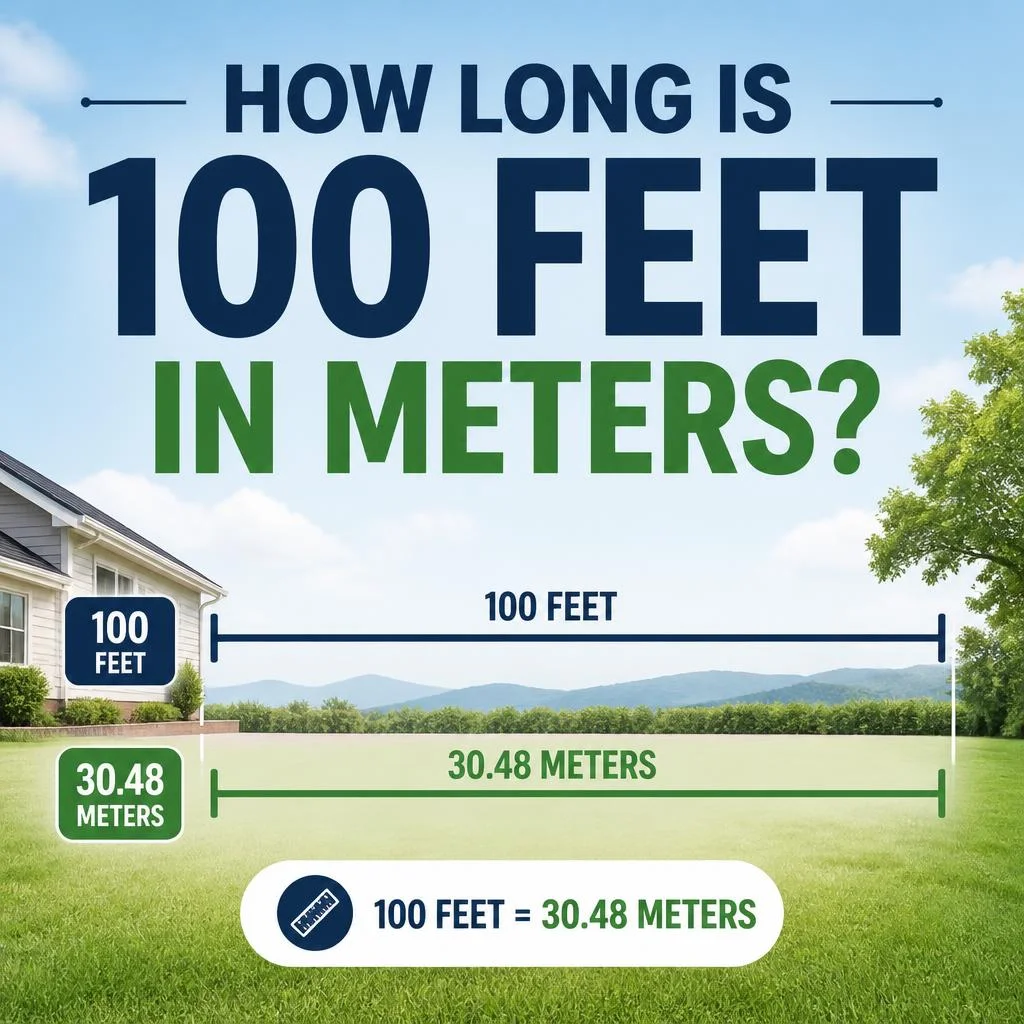
100 feet is exactly 30.48 meters.
This is one of the most useful conversions because meters are commonly used for measuring larger distances outside the United States.
To visualize 30.48 meters, imagine a straight line extending a little more than 30 meters. It is also slightly longer than three 10-meter sections placed end to end.
The difference between 100 feet and 30 meters is only 0.48 meter, or 48 centimeters. So, for a rough estimate, you can think of 100 feet as approximately 30 meters.
For precise construction, property, sports, or engineering measurements, however, 30.48 meters is the correct conversion.
How Many Inches Are in 100 Feet?
There are exactly 1,200 inches in 100 feet.
The calculation uses the standard relationship between feet and inches:
1 foot = 12 inches
Therefore:
100 feet × 12 = 1,200 inches
This is useful when a measurement needs to be expressed entirely in inches. For example, a 100-foot length of cable would be 1,200 inches long.
It would be impractical to measure such a distance with a small ruler, but the conversion is useful for specifications, product measurements, construction plans, and other technical applications.
How Many Yards Are in 100 Feet?
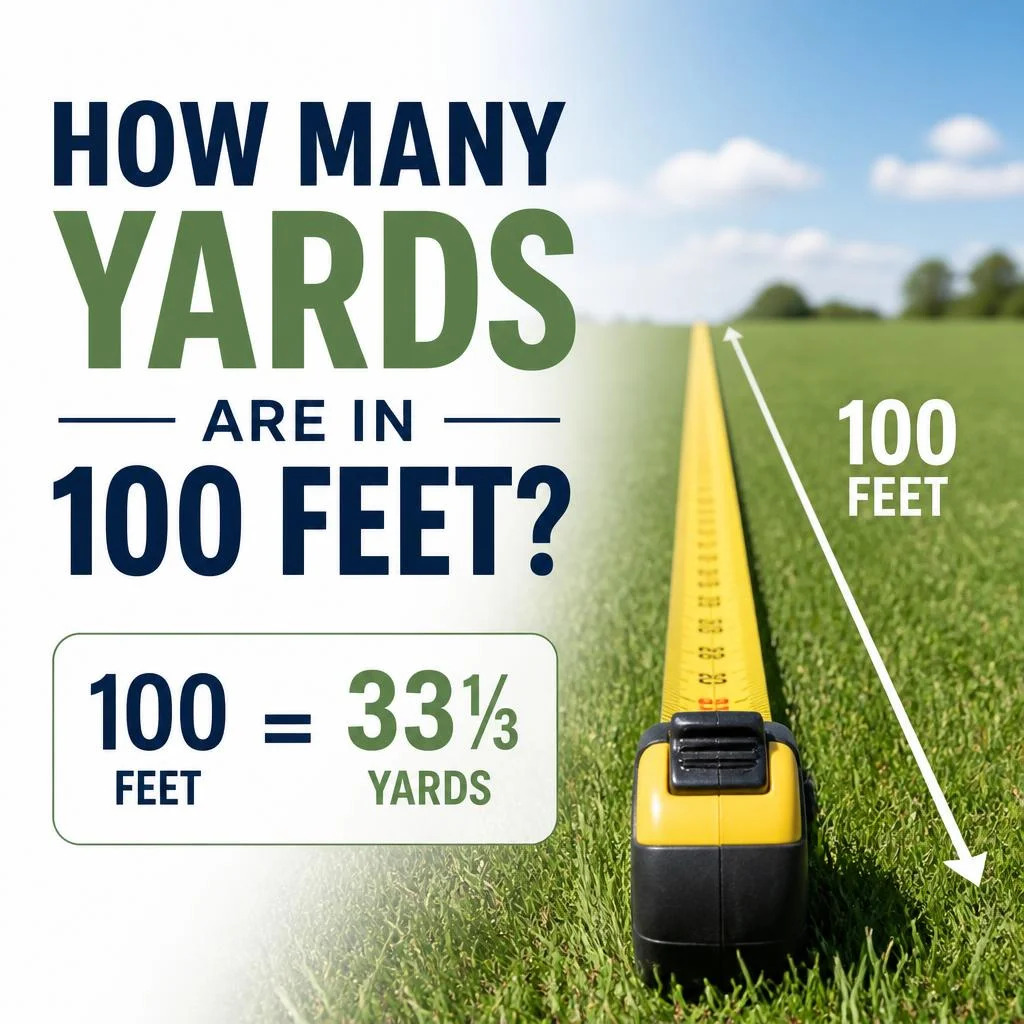
There are approximately 33.33 yards in 100 feet.
Since one yard contains three feet:
100 ÷ 3 = 33.333… yards
The repeating decimal means the exact fraction is 33⅓ yards.
This conversion is especially useful for sports because football fields and other athletic areas are often described in yards.
A 100-foot distance is shorter than 40 yards but longer than 30 yards. More precisely, it is one-third of a yard longer than 33 yards.
What Does 100 Feet Look Like?
A measurement becomes easier to understand when you compare it with familiar distances.
Imagine standing at one end of a straight 100-foot line. Walking toward the opposite end would take a noticeable amount of time, but it would still be a relatively short distance compared with a city block or a mile.
A few practical comparisons include:
- About 33⅓ yards
- About 30.48 meters
- 1,200 inches
- Slightly longer than many residential lots are wide
- Comparable to the length of a large swimming pool area
- Longer than a standard school bus
- About one-third of a football field
The exact visual impression depends on the surrounding space, but these comparisons provide useful reference points.
100 Feet Compared With a Football Field
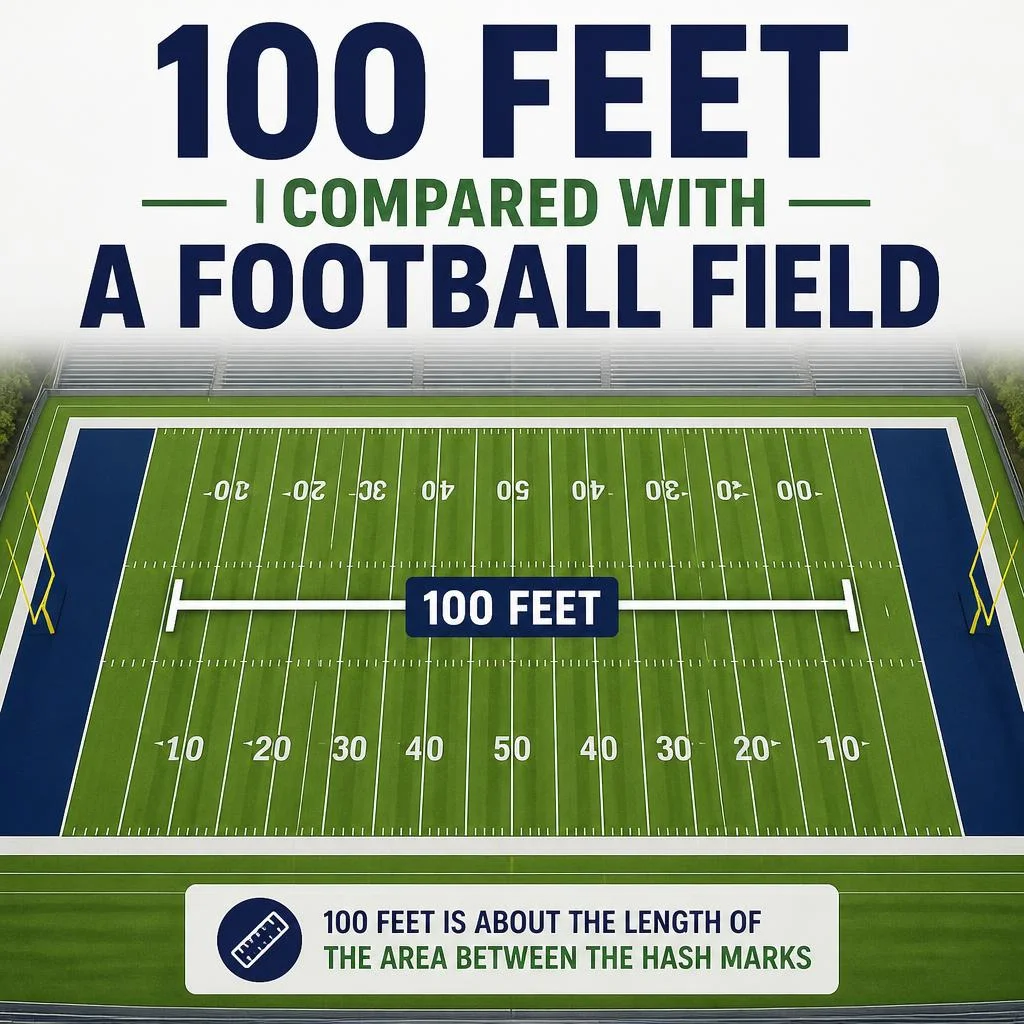
A standard American football field is 360 feet long when both end zones are included.
The playing field between the end lines is 300 feet, while each end zone adds 30 feet.
That means 100 feet represents:
100 ÷ 360 = 27.78%
So a 100-foot distance is a little more than one-quarter of the total length of a football field.
If you exclude the end zones, the 100-foot distance represents exactly one-third of the 300-foot playing area.
This makes a football field one of the easiest ways to visualize the measurement.
100 Feet Compared With a Basketball Court
An NBA basketball court is 94 feet long.
That means 100 feet is 6 feet longer than the length of an NBA court.
| Distance | Length |
|---|---|
| NBA court | 94 ft |
| 100-foot distance | 100 ft |
| Difference | 6 ft |
If you imagine an NBA court extending from one baseline to the other, adding another 6 feet would bring the total to 100 feet.
This is a particularly useful comparison because basketball courts provide a familiar reference for many people.
100 Feet Compared With a Tennis Court
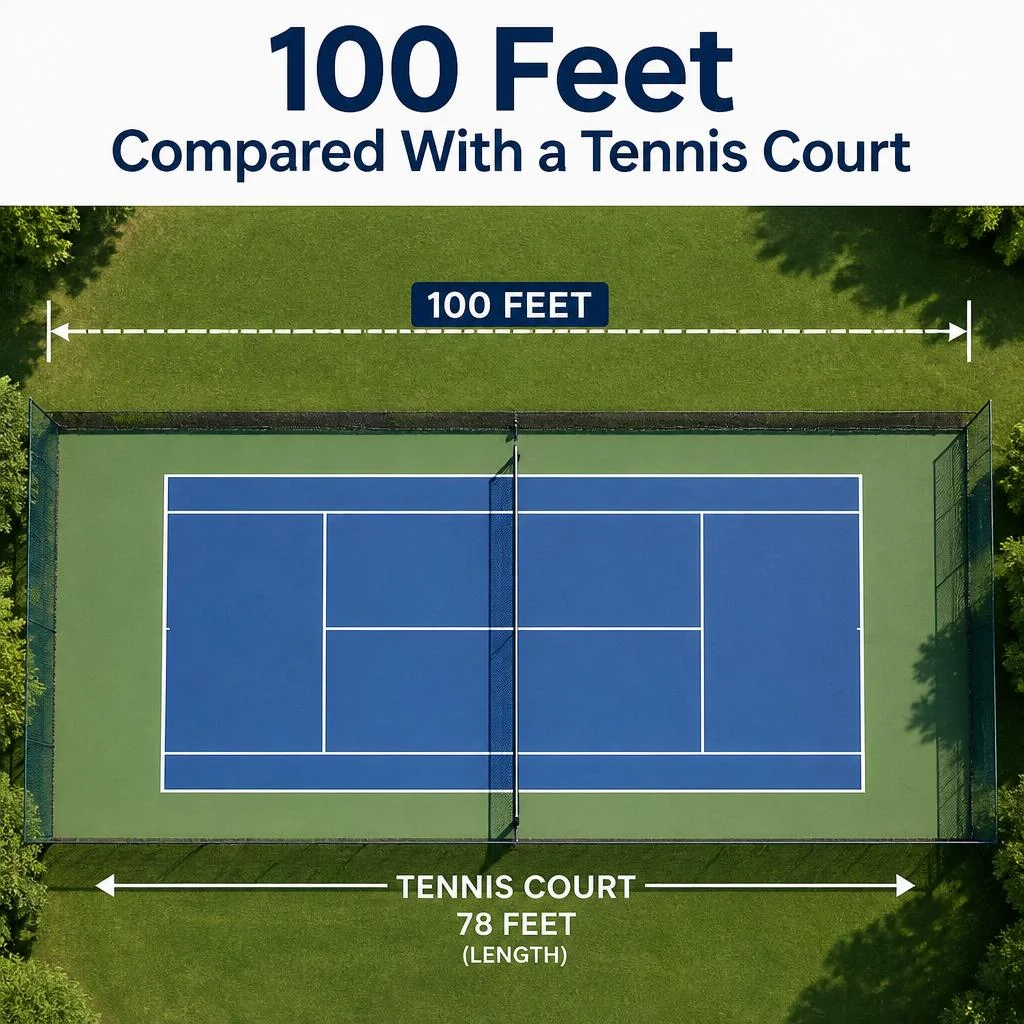
A regulation tennis court is 78 feet long for both singles and doubles play.
Compared with that length:
100 − 78 = 22 feet
So 100 feet is 22 feet longer than the length of a tennis court.
You can picture the distance as one complete tennis court length plus another 22 feet.
The comparison becomes even easier when you visualize the court from baseline to baseline rather than measuring diagonally.
100 Feet Compared With a Swimming Pool
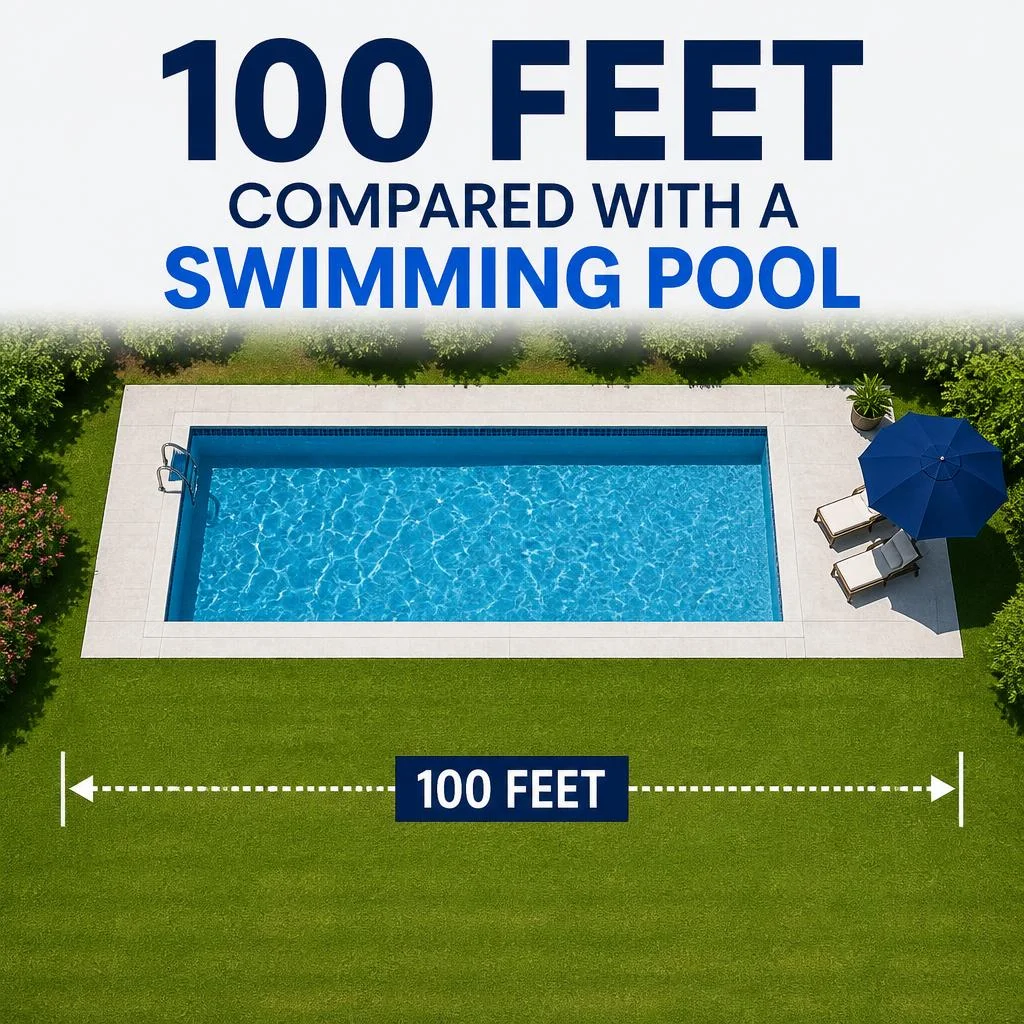
A common competitive swimming pool length is 50 meters, which is approximately 164 feet.
A 100-foot distance is therefore considerably shorter than an Olympic-size 50-meter pool.
By contrast, a 25-yard pool is 75 feet long. A 100-foot distance is therefore 25 feet longer than a 25-yard pool.
These comparisons demonstrate why the exact pool size matters when using swimming facilities to visualize distance.
100 Feet Compared With a School Bus
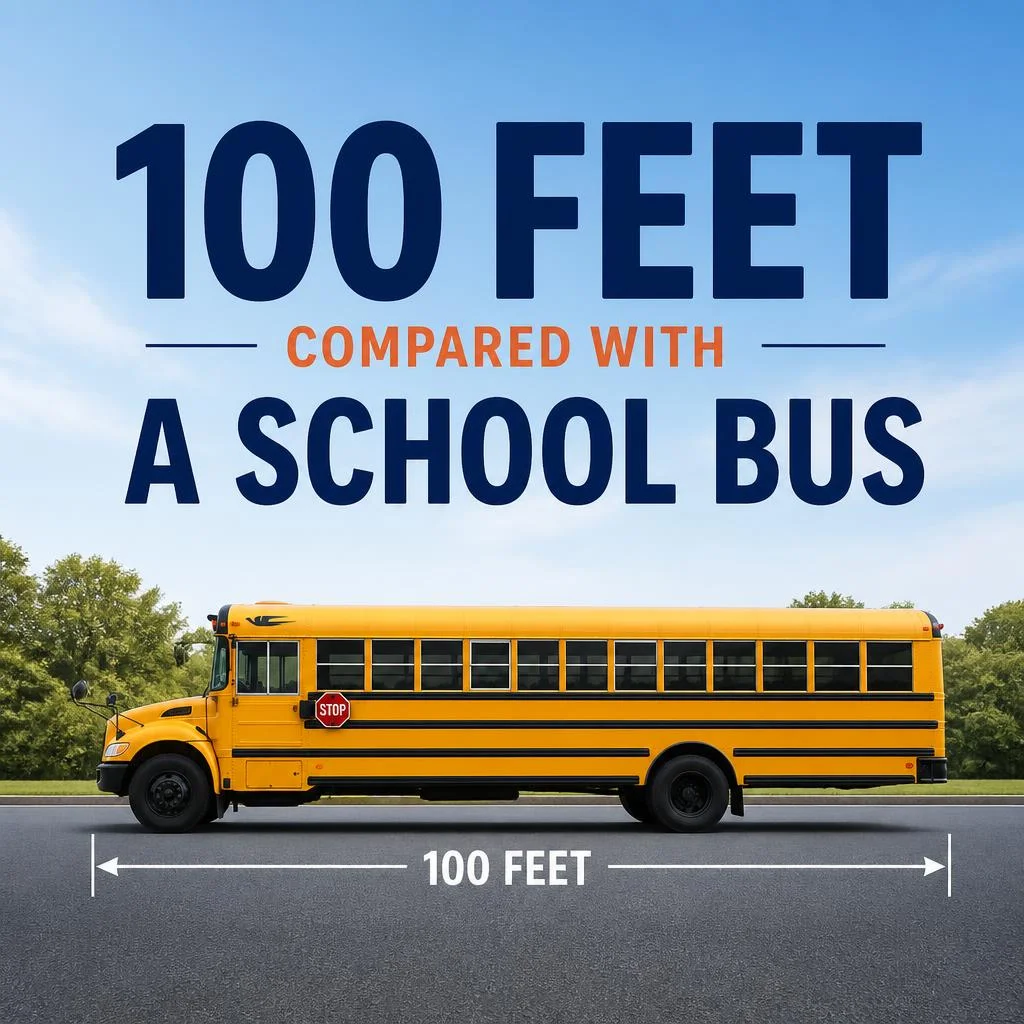
A typical school bus is generally around 35 to 45 feet long, although dimensions vary by model.
Using a 40-foot bus as a simple visual reference:
100 ÷ 40 = 2.5
So three buses placed end to end would extend beyond 100 feet, while two buses would cover roughly 80 feet.
Because bus sizes vary, this is an approximate comparison rather than an exact measurement.
100 Feet Compared With a House
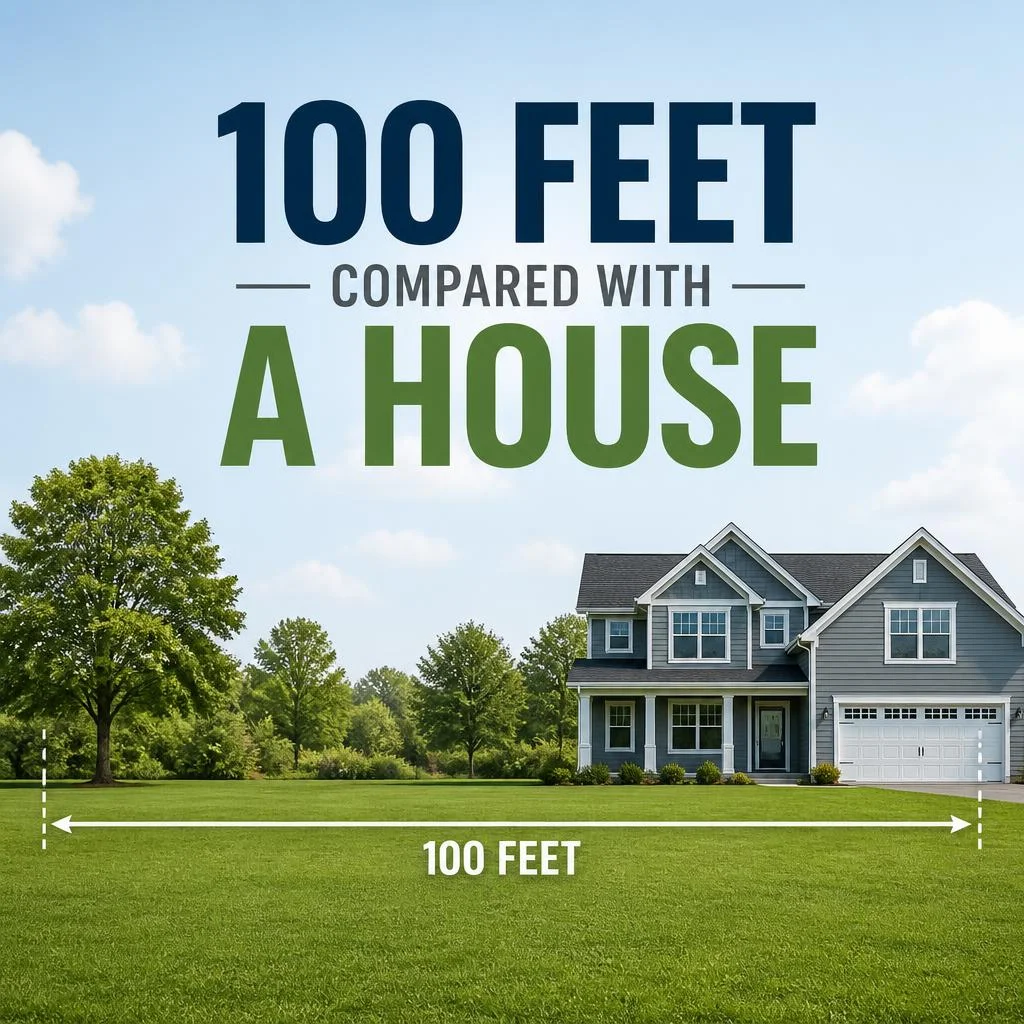
Homes vary greatly in size, so there is no single standard house length that equals 100 feet.
However, many single-family homes are considerably shorter than 100 feet from one exterior end to the other.
For example, a hypothetical 50-foot-long home would need to be placed end to end twice to reach 100 feet.
This comparison is most useful for understanding the distance horizontally. It should not be confused with the home’s total floor area, which is measured in square feet rather than linear feet.
Is 100 Feet a Long Distance?
For everyday walking, 100 feet is a short-to-moderate distance. It is far enough that you can clearly see the difference between the starting point and the endpoint, but it is not a large travel distance.
For measurement and construction purposes, however, 100 feet can be significant.
A 100-foot length might be relevant when measuring:
- Fencing
- Electrical cable
- Garden hoses
- Property features
- Landscaping areas
- Outdoor structures
- Utility lines
- Rope
- Construction materials
The meaning of the distance depends heavily on what is being measured.
How Long Does It Take to Walk 100 Feet?
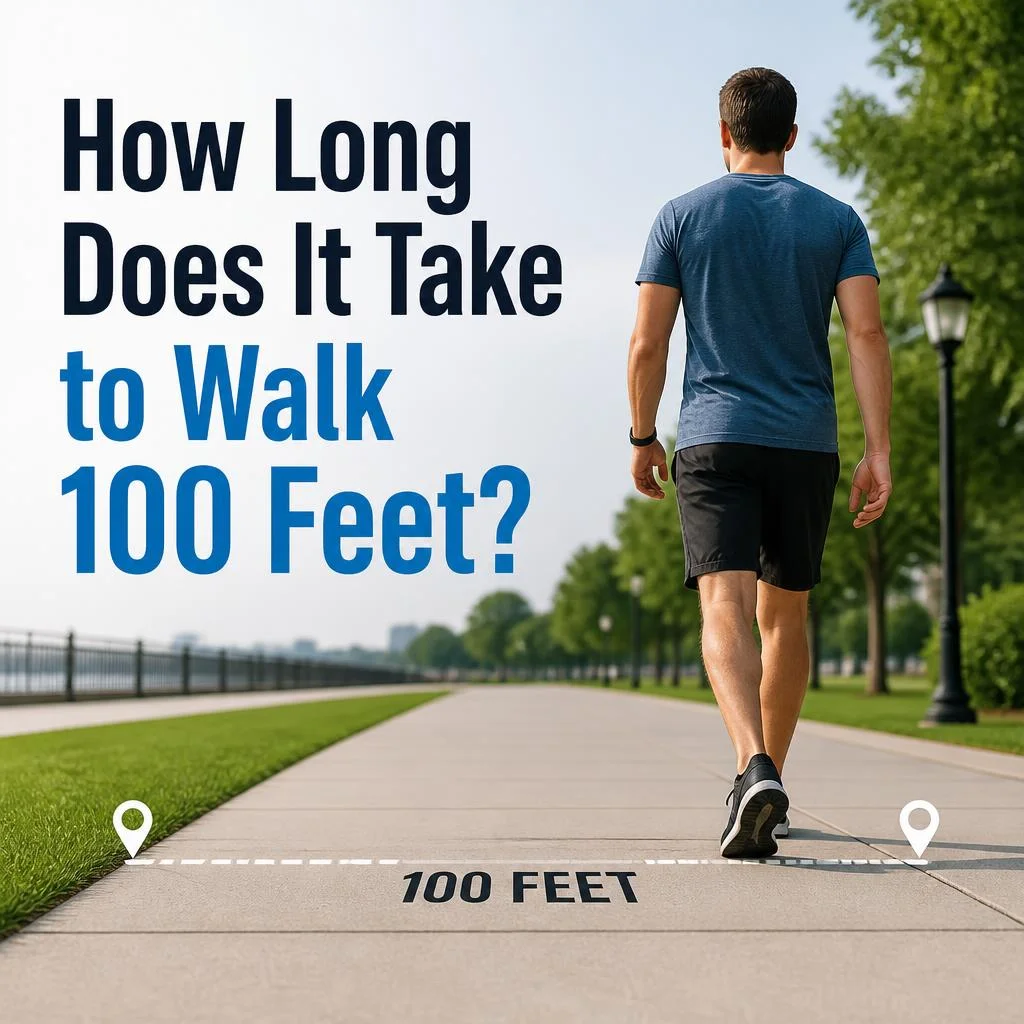
Walking speed varies from person to person, but a normal adult walking pace is often around 3 miles per hour.
At that pace, walking 100 feet takes roughly 23 seconds.
Someone walking more quickly could cover the same distance in less time, while a slower pace would take longer.
The calculation is only an estimate because walking speed, terrain, footwear, and stops can all affect the result.
How Many Steps Are 100 Feet?
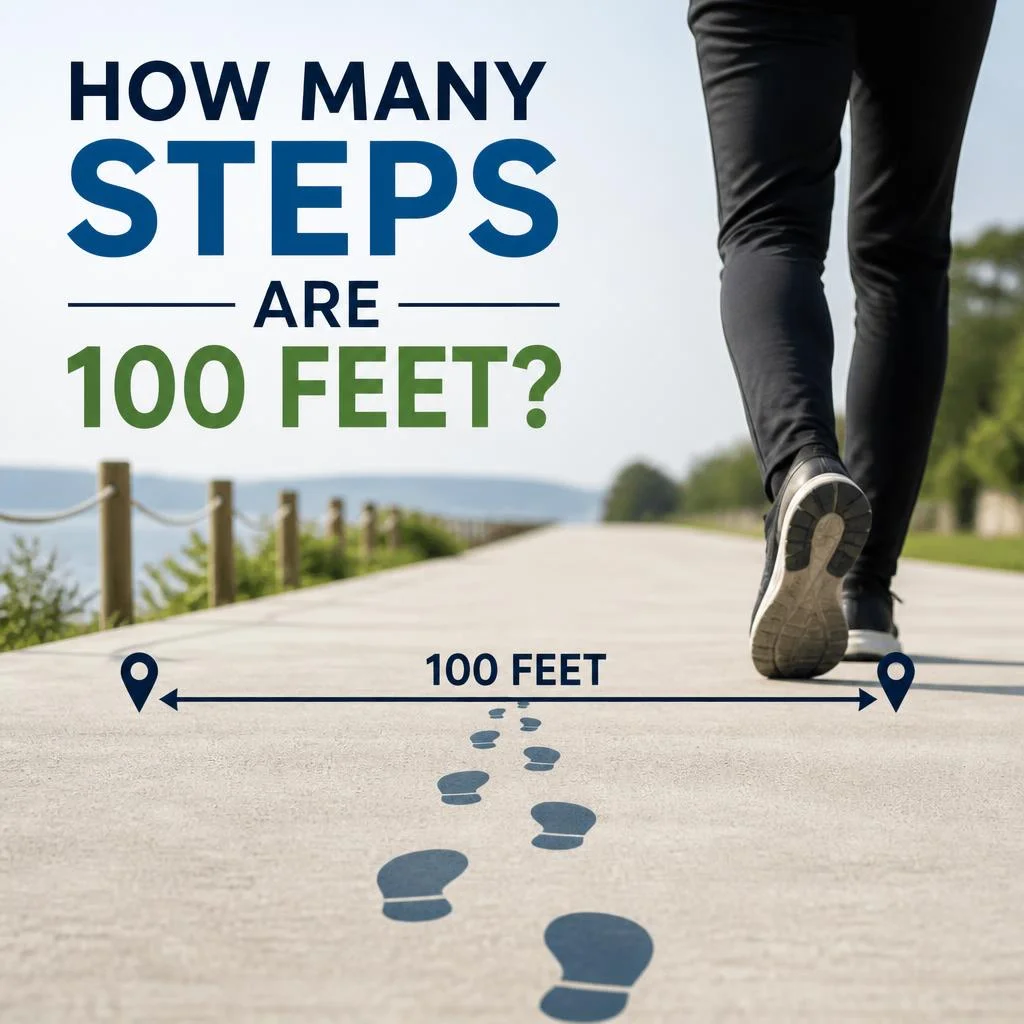
The number of steps required depends on stride length.
If one step averages about 2.5 feet, then:
100 ÷ 2.5 = 40 steps
So 100 feet might be around 40 average walking steps.
A person’s actual step count could be higher or lower. Taller people often have longer strides, while shorter people may take more steps to cover the same distance.
For a rough field estimate, counting approximately 40 normal steps can provide a useful approximation.
How to Measure 100 Feet Accurately
If you need to mark an exact 100-foot distance, a tape measure designed for longer distances is the simplest option.
Use a long measuring tape
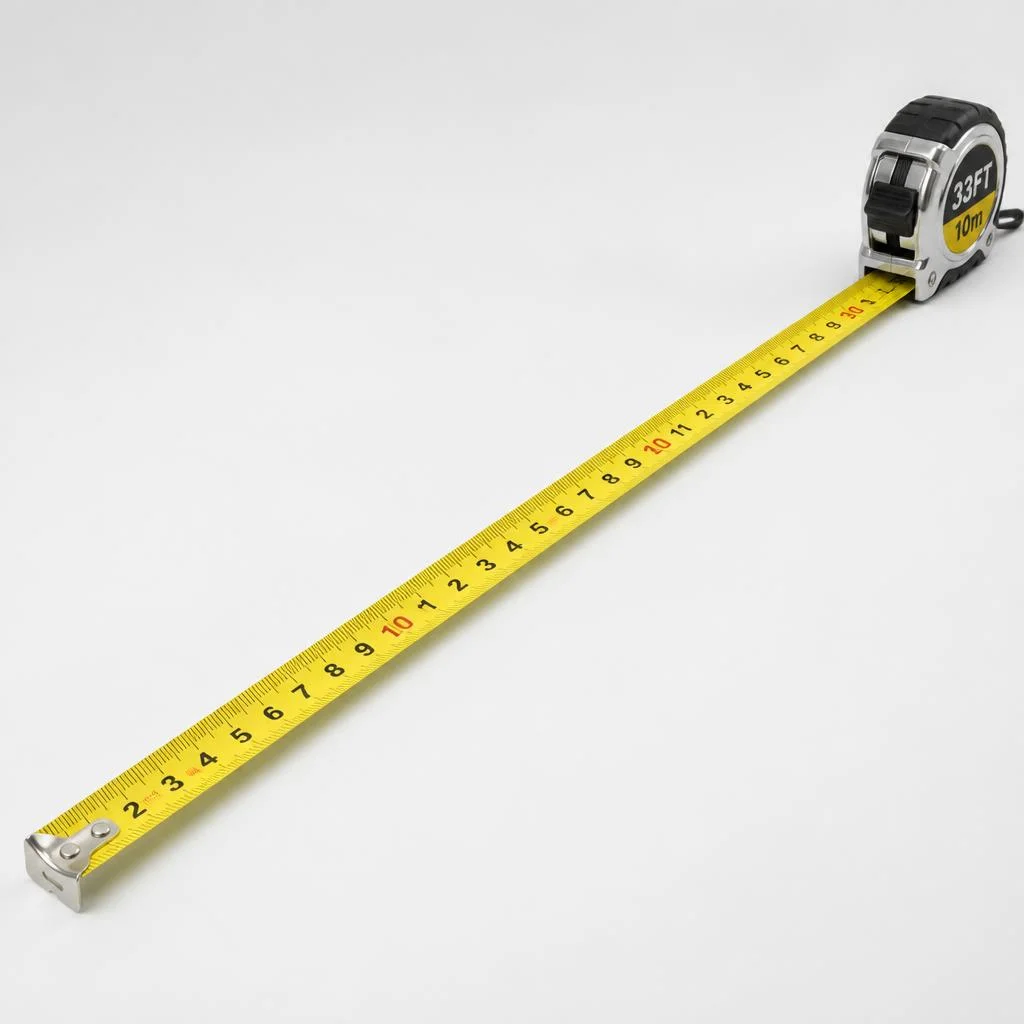
Extend a tape measure along a straight path until it reaches 100 feet.
Use a measuring wheel
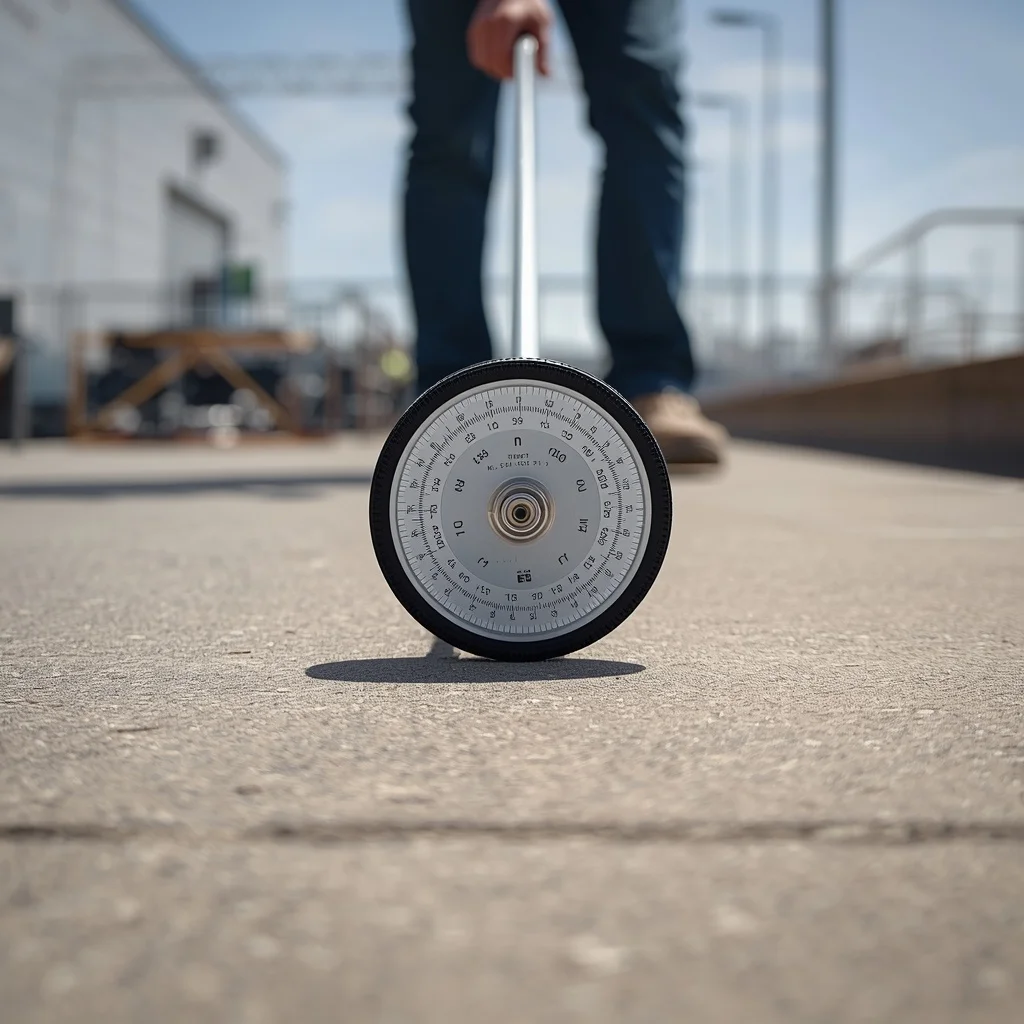
A measuring wheel can be more convenient for large outdoor spaces. Roll it along the ground and monitor the distance shown on the display.
Use known reference points
If you already have a 50-foot reference, placing two 50-foot sections end to end creates exactly 100 feet.
Use a laser distance meter
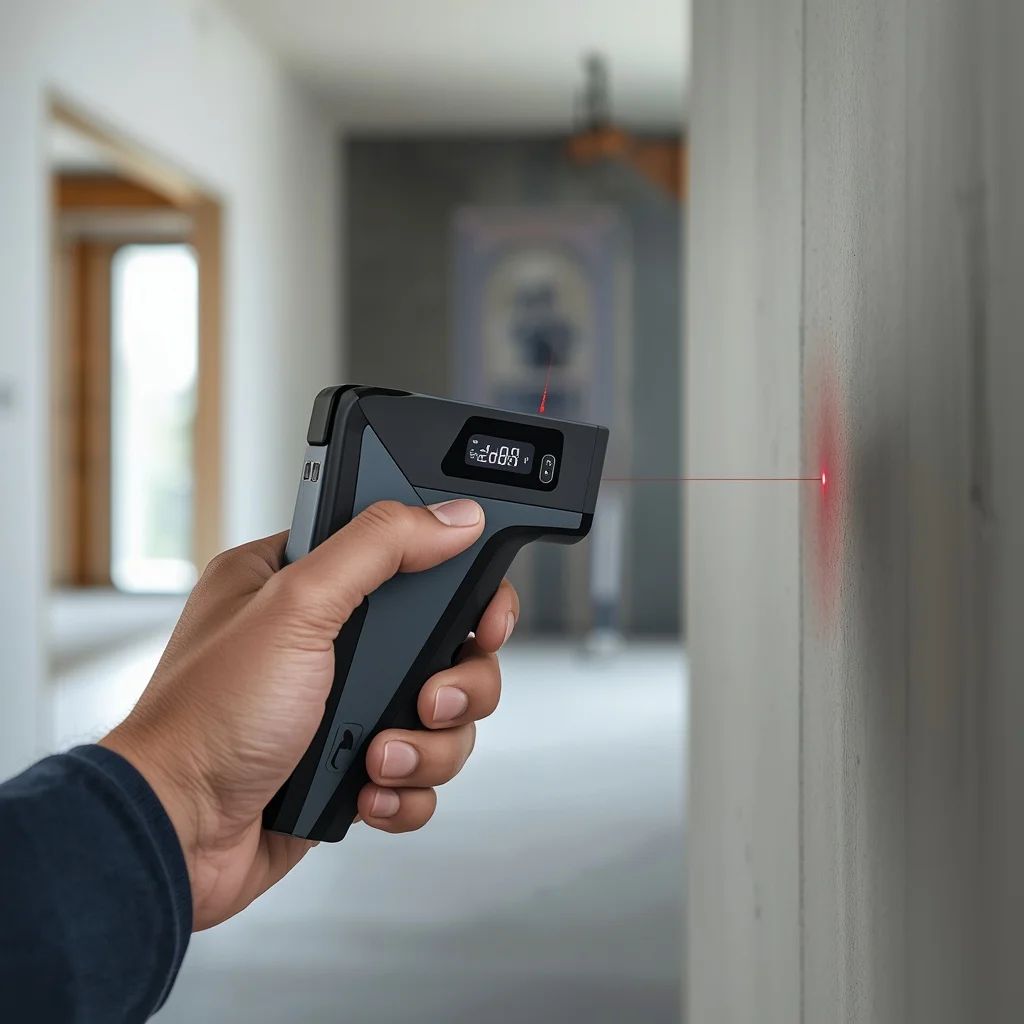
For suitable indoor or outdoor situations, a laser distance meter can provide a quick digital measurement. The device must be appropriate for the range and conditions involved.
For important property or construction measurements, use a properly calibrated tool rather than estimating by steps.
100 Feet vs 100 Square Feet
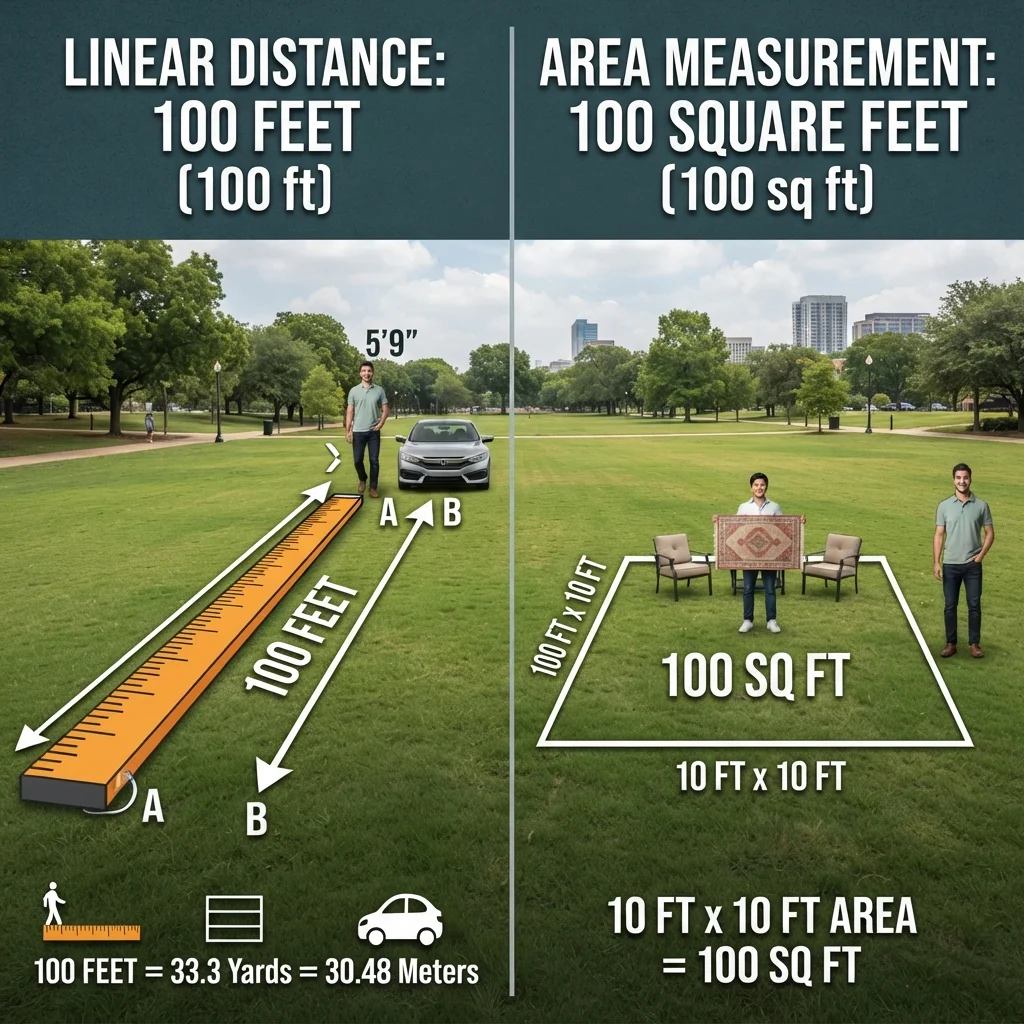
These measurements describe completely different things.
100 feet is a measurement of length. It describes a straight-line distance from one point to another.
100 square feet measures area. It describes the amount of surface space within boundaries.
For example, a rectangle measuring 10 feet by 10 feet has an area of:
10 × 10 = 100 square feet
That square is only 10 feet long on each side, not 100 feet long.
Understanding the difference between linear feet and square feet prevents common measurement mistakes.
100 Feet vs 100 Meters
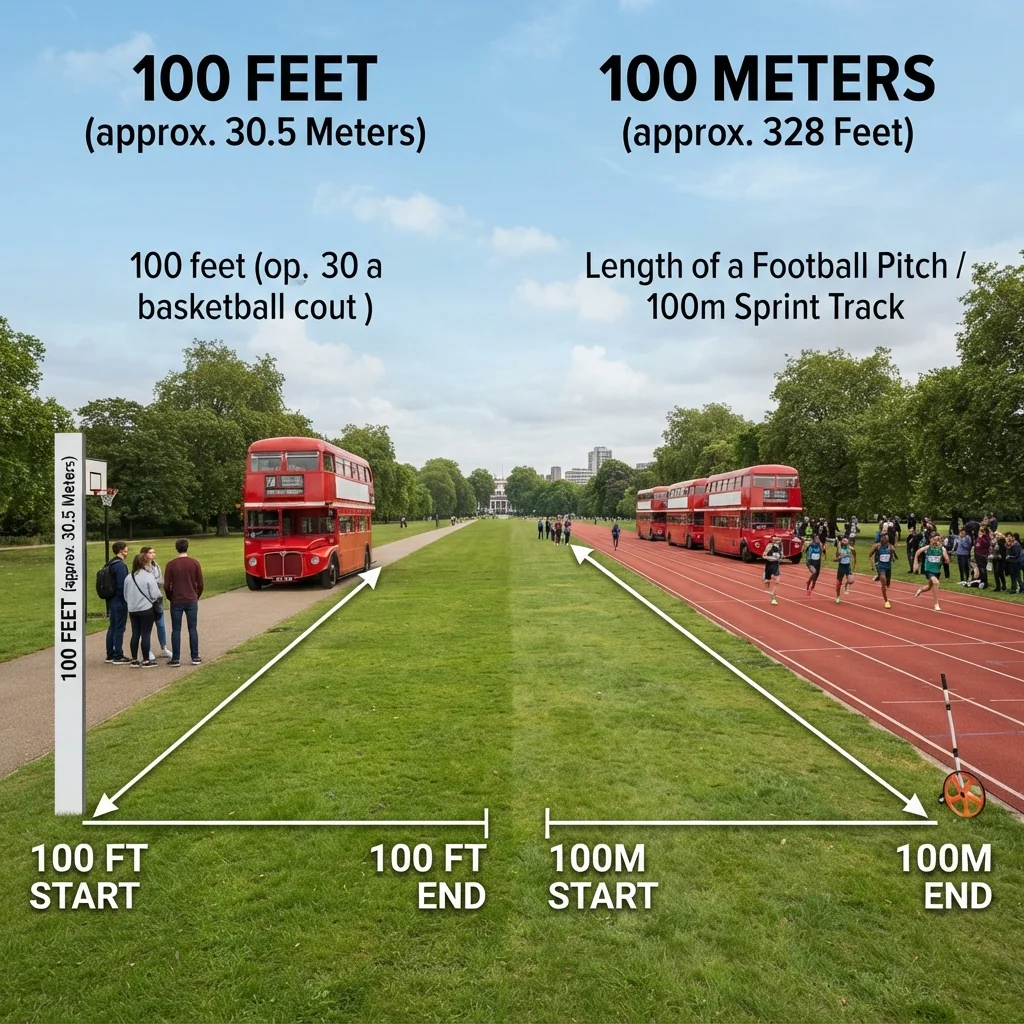
Although these numbers sound similar, they represent different distances.
- 100 feet = 30.48 meters
- 100 meters = 328.08 feet
Therefore, 100 meters is more than three times as long as 100 feet.
The difference is:
328.08 − 100 = 228.08 feet
This distinction is especially important when comparing American measurements with metric specifications.
50 Feet vs 100 Feet
Doubling 50 feet gives exactly 100 feet.
| Measurement | Inches | Meters |
|---|---|---|
| 50 feet | 600 in | 15.24 m |
| 100 feet | 1,200 in | 30.48 m |
| Difference | 600 in | 15.24 m |
A useful visualization is to imagine two identical 50-foot sections connected end to end.
That creates the complete 100-foot length without any complicated conversion.
100 Feet vs 200 Feet
The same relationship works in the opposite direction.
A 200-foot distance is exactly twice as long as 100 feet.
| Distance | Meters | Inches |
|---|---|---|
| 100 ft | 30.48 m | 1,200 in |
| 200 ft | 60.96 m | 2,400 in |
If 100 feet is one reference length, adding another identical section produces 200 feet.
Common Objects That Can Help You Visualize 100 Feet
No everyday object has to be exactly 100 feet long for it to be useful as a comparison.
Some practical reference points include:
| Reference | Approximate length |
|---|---|
| NBA basketball court | 94 ft |
| Tennis court | 78 ft |
| Typical school bus | 35–45 ft |
| 2 × 50-foot sections | 100 ft |
| 4 × 25-foot sections | 100 ft |
| 10 × 10-foot sections | 100 ft |
The NBA court comparison is especially close: adding just 6 feet to its 94-foot length gives exactly 100 feet.
Frequently Asked Questions
How many inches are in 100 feet?
There are exactly 1,200 inches in 100 feet.
How many meters is 100 feet?
100 feet equals exactly 30.48 meters.
How many yards are 100 feet?
100 feet equals 33⅓ yards, or approximately 33.33 yards.
Is 100 feet longer than an NBA basketball court?
Yes. An NBA court is 94 feet long, making a 100-foot distance 6 feet longer.
Is 100 feet one-third of a football field?
If you are referring to the 300-foot playing area between the end lines, yes. One-third of 300 feet is exactly 100 feet. The entire field, including end zones, is 360 feet long.
How many steps does it take to walk 100 feet?
An average estimate is around 40 steps, assuming a stride of about 2.5 feet. Individual results vary.
How far is 100 feet in miles?
100 feet equals approximately 0.01894 miles.
How far is 100 feet in centimeters?
100 feet equals exactly 3,048 centimeters.
Is 100 feet the same as 100 meters?
No. 100 feet is 30.48 meters, while 100 meters equals about 328.08 feet.
Conclusion
A distance of 100 feet equals 1,200 inches, 33⅓ yards, 30.48 meters, 3,048 centimeters, or 30,480 millimeters. In everyday terms, it is a substantial but manageable distance that can be visualized using familiar sports courts and other reference points.
One of the closest comparisons is an NBA basketball court, which is 94 feet long. Adding 6 feet gives a total of 100 feet. The distance is also one-third of the 300-foot playing area of a standard American football field.
For practical measuring, a long tape measure, measuring wheel, or suitable laser distance meter can provide a more reliable result than estimating by steps. Once converted into familiar units, 100 feet becomes much easier to understand and visualize accurately.

Lucas Morgan is a passionate writer who enjoys creating helpful, engaging, and practical content for readers. He focuses on sharing clear ideas, useful insights, and creative inspiration through every article.


