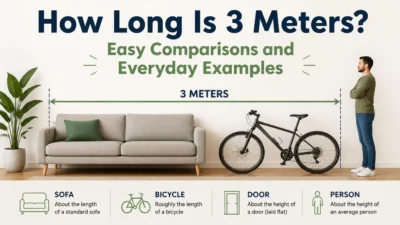

Twenty-five feet can be difficult to picture if you do not use a measuring tape every day. However, familiar objects can help you understand this length. For example, you can compare 25 feet with cars, rooms, furniture, and other everyday items.
So, how long is 25 feet visually? It equals 300 inches, 8.33 yards, or approximately 7.62 meters. That is a considerable distance for a room, driveway, or backyard space.
In this guide, you will learn how long 25 feet looks in real life. You will also discover simple ways to estimate this distance without a measuring tape.
How Long Is 25 Feet?
Twenty-five feet is equal to 300 inches or 7.62 meters. It is also 8 feet longer than a 17-foot space and 5 feet shorter than a 30-foot distance.
Here are the basic conversions:
| Measurement Unit | Equivalent Length |
|---|---|
| Feet | 25 feet |
| Inches | 300 inches |
| Yards | 8.33 yards |
| Meters | 7.62 meters |
| Centimeters | 762 centimeters |
| Millimeters | 7,620 millimeters |
These conversions help you understand the length in different measurement systems. In the United States, people commonly use feet and inches for home projects, room measurements, and outdoor spaces. In contrast, meters and centimeters are common in many other countries.
For a quick mental picture, imagine a straight line stretching 25 feet across a floor. That line would cover a large part of a living room or a substantial section of a driveway.
What Does 25 Feet Look Like Visually?
The easiest way to picture 25 feet is to compare it with objects you already know. Cars, beds, rooms, and walking distances can all provide a helpful reference.
However, these comparisons are estimates. Actual sizes vary by model, design, and location.
1. About Two and a Half Large Cars

Many passenger cars measure roughly 14 to 16 feet long. Larger SUVs can be longer, while compact cars are often shorter.
If you imagine a 15-foot car followed by another 10-foot section, you get a total of 25 feet. In simple terms, 25 feet is around one and a half to nearly two typical car lengths, depending on the vehicles you choose.
This comparison is especially useful in a driveway or parking area. You can look at a parked car and use its length as a rough guide.
2. A Little Longer Than Two Adult Beds

Many adult beds measure around 6.25 feet to 6.7 feet long. Two beds placed end to end would therefore cover approximately 12.5 to 13.4 feet.
That is only about half of 25 feet. You would need nearly four bed lengths to cover the full distance, depending on the bed size.
This example shows why it helps to check the actual dimensions of an object before using it as a measuring reference.
3. A Long Living Room

A 25-foot room is longer than many standard living rooms. Some homes have living rooms measuring around 12 to 18 feet in one direction, although layouts vary widely.
Imagine standing at one end of a 25-foot room and looking toward the opposite wall. You would see enough floor space for a large seating area, a walkway, and possibly additional furniture.
The width of the room matters, too. A room that measures 25 feet long and 12 feet wide has a different feel from one measuring 25 feet long and 20 feet wide.
4. Five Sections of Five Feet

A simple way to visualize 25 feet is to divide it into five equal sections.
Each section measures 5 feet. Imagine marking a floor every 5 feet until you reach the 25-foot point.
This method works well in a backyard, garage, or empty room. It also makes the measurement easier to estimate because you only need to picture a familiar 5-foot length five times.
5. A Short Swimming Pool

Some small residential pools measure around 25 feet in length. A pool of this size can provide space for casual swimming and cooling off during warm weather.
However, swimming pools come in many shapes and sizes. A 25-foot pool is not the same as a standard Olympic-size pool, which measures 50 meters long.
This comparison helps you picture 25 feet as a substantial outdoor distance without confusing it with competitive swimming dimensions.
Seven Everyday Objects That Help You Picture 25 Feet
Everyday objects make measurements easier to understand. The following examples provide useful reference points, although none replaces an actual measurement.
1. A Parking Space and Extra Room
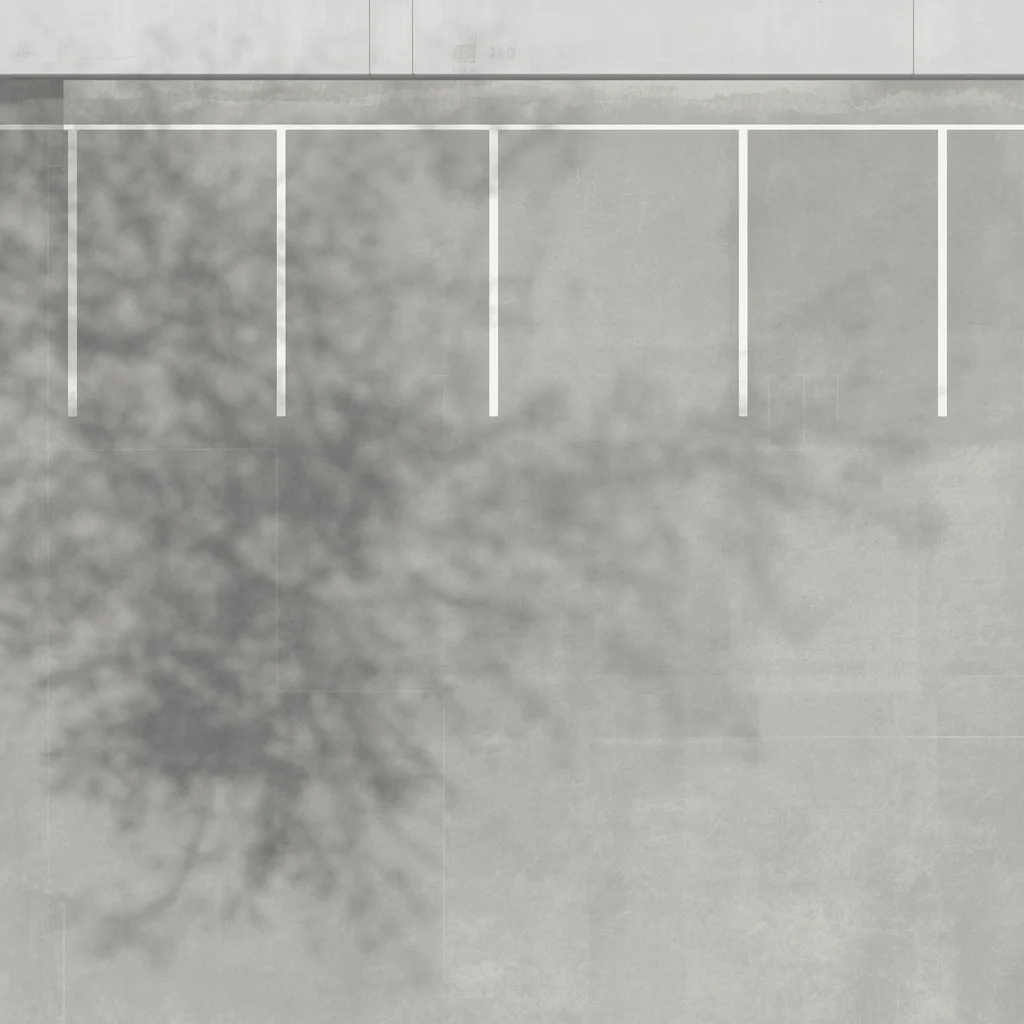
A typical U.S. parking space is often around 18 feet long, though requirements differ by location and parking layout.
That means 25 feet is about 7 feet longer than an 18-foot parking space. You can picture a standard parking space with an additional 7-foot section at one end.
This is useful when estimating a driveway, garage entrance, or outdoor parking area. Still, check the actual parking dimensions before planning construction.
2. A Small Recreational Vehicle

Some compact recreational vehicles and camper vans measure around 20 to 25 feet long. A vehicle at the upper end of that range gives you a helpful picture of the distance.
Imagine one long vehicle occupying a driveway. Its length may come close to 25 feet, depending on the model and whether accessories extend beyond the body.
This example works best when you use a specific vehicle with known dimensions.
3. Several Large Sofas

Many three-seat sofas measure approximately 6 to 8 feet wide. Three 8-foot sofas placed end to end would cover 24 feet.
That is very close to 25 feet. However, sofas are designed for different spaces, so their actual widths can vary.
This comparison is helpful when planning furniture arrangements or imagining a long wall in a family room.
4. A Backyard Garden Bed

A 25-foot garden bed can provide a long planting area for flowers, vegetables, or shrubs. It could run along a fence or beside a walkway.
For instance, a garden bed measuring 25 feet long and 3 feet wide covers 75 square feet. This gives you a practical example of how a linear measurement can relate to a gardening project.
Remember that 25 feet describes the length. You still need the width to calculate the total area.
5. A Long Extension Cord
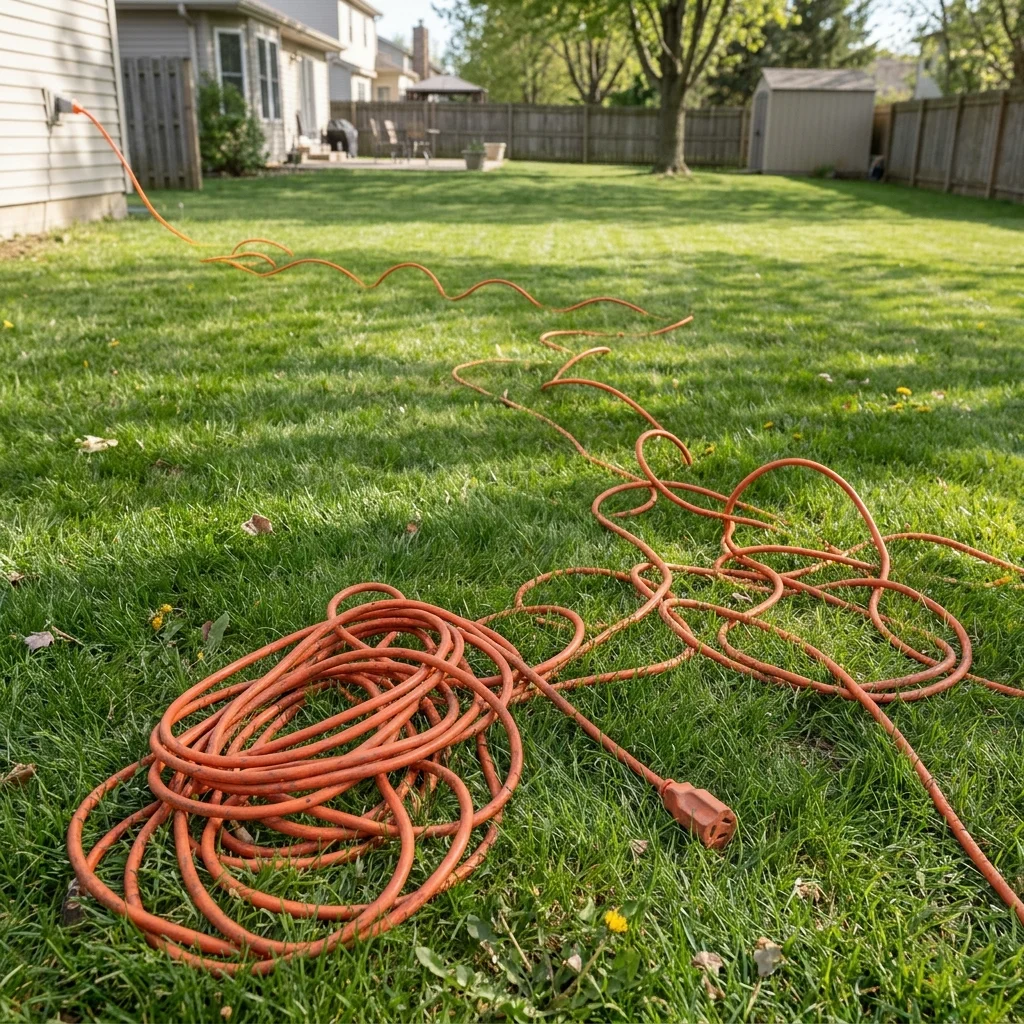
A 25-foot extension cord is a familiar product in many American homes. It can help you picture the distance from a wall outlet to a work area or outdoor tool.
A cord laid straight across the floor would cover 25 feet from end to end. In real use, bends and routing can reduce the straight-line distance it reaches.
Always choose an extension cord rated for the equipment and conditions in which you plan to use it.
6. A Short Walk Across an Open Space

Twenty-five feet is a short walking distance. Many adults can cover it in roughly 8 to 12 ordinary steps, depending on stride length.
For example, you might walk about 25 feet across a small yard or from one side of a room to another. This can help you estimate the distance when no measuring tool is available.
Walking steps are only a rough guide. People have different stride lengths, and their steps change with speed and terrain.
How Long Is 25 Feet Compared With a Person?
People provide another useful reference for visualizing length. An adult who is 5 feet 6 inches tall would need to stand about four and a half times their height to match 25 feet.
Here is a simple comparison:
| Reference Height | Approximate Number Needed to Equal 25 Feet |
|---|---|
| 5 feet | 5 people |
| 5 feet 6 inches | About 4.5 people |
| 6 feet | About 4.2 people |
These figures compare height with length. They do not mean that people standing upright can naturally form a straight, floor-level measuring line. Instead, they help you imagine how large 25 feet is compared with an adult’s height.
For a more practical method, imagine five 5-foot sections placed along the ground. This approach is easier to apply when estimating a room or outdoor space.
How Long Is 25 Feet in Inches?

Twenty-five feet equals 300 inches. Since one foot contains 12 inches, you can find the total by multiplying 25 by 12.
The calculation is straightforward:
25 × 12 = 300 inches.
This conversion is helpful for carpentry, furniture planning, fabric measurements, and other projects that use inches.
For example, if a wall measures 25 feet long, its length is 300 inches. You can use that figure when working with a plan that lists measurements in inches instead of feet.
How Long Is 25 Feet in Meters?

Twenty-five feet equals approximately 7.62 meters. To convert feet into meters, multiply the number of feet by 0.3048.
The calculation is:
25 × 0.3048 = 7.62 meters.
This conversion is useful when reading international product specifications, building plans, or sports measurements. Many U.S. products use feet, while international specifications often use meters.
You can also express 7.62 meters as 762 centimeters. Both measurements describe the same length.
Can You Estimate 25 Feet Without a Measuring Tape?

Yes. You can estimate 25 feet by using familiar objects, repeated steps, or marked sections. The best method depends on the space and the level of accuracy you need.
Use Five-Foot Sections
Picture five equal sections, each measuring 5 feet. If you can estimate one section, you can repeat it five times to reach 25 feet.
This method works well in open areas. However, your estimate may be off if the original 5-foot reference is inaccurate.
Count Your Walking Steps
Walk across the space at a comfortable pace and count your steps. Many adults take roughly 2 to 2.5 feet per ordinary step, but stride length varies.
If your average step covers 2.5 feet, ten steps would cover about 25 feet. If your steps are shorter, you may need more steps.
For better accuracy, measure a known distance first and calculate your average step length.
Use a Known Object
A car, extension cord, or room with known dimensions can provide a useful reference. Compare the object with the space you want to estimate.
For instance, if you know a vehicle is 15 feet long, you can estimate how much additional space is needed to reach 25 feet. This method is convenient, but it is not precise enough for most construction work.
Measure With a Tape or Laser Tool
When accuracy matters, use a measuring tape or laser distance meter. These tools are especially helpful for furniture placement, fencing, flooring, and renovation projects.
Visual comparisons are great for understanding scale. However, actual measurements are safer when you need to buy materials or confirm that something will fit.
Where Might You Use a 25-Foot Measurement?

A 25-foot length appears in many everyday situations. Knowing how it looks can help with home projects and outdoor planning.
Home and Room Planning
You may need to measure a long wall, a hallway, or the length of an open living area. Understanding 25 feet can help you decide where furniture might fit.
Even so, measure both length and width before buying large furniture. Doorways, corners, and walking paths can affect the final arrangement.
Driveways and Parking Areas
Twenty-five feet can help you estimate the length of a driveway section or a parking area. It may also provide room for a vehicle and additional clearance, depending on the layout.
Before building or changing a driveway, check local requirements and measure the actual vehicles that will use it.
Gardens and Fences
A 25-foot measurement can describe a garden bed, fence section, or outdoor walkway. It is particularly useful when planning rows of plants or estimating materials.
For fencing, remember that the total project length may include corners, gates, and separate sections. Calculate each part before ordering supplies.
Cables and Equipment
Some cables, hoses, and extension cords are sold in 25-foot lengths. Knowing this distance can help you decide whether a product will reach the intended area.
However, always allow extra length for routing and bends. For electrical equipment, check the product’s safety rating and follow the manufacturer’s instructions.
Is 25 Feet Considered Long?

Whether 25 feet is long depends on what you are measuring. For a small bedroom, it would be an unusually long dimension. For a driveway or backyard, it may be a modest distance.
A 25-foot wall can be a major feature in a room. By comparison, 25 feet is short next to a swimming pool measured in tens of meters or a large sports field.
Context makes the measurement easier to understand. Instead of asking whether 25 feet is always long, consider the object, room, or space you are measuring.
Frequently Asked Questions
How many inches are in 25 feet?
There are 300 inches in 25 feet. Multiply 25 by 12 because each foot contains 12 inches.
How many meters is 25 feet?
Twenty-five feet equals 7.62 meters. In centimeters, that is 762 cm.
Is 25 feet longer than a car?
It is longer than many passenger cars, which commonly measure around 14 to 16 feet. However, some large vehicles may approach or exceed 25 feet.
How many steps does it take to walk 25 feet?
Many adults may cover 25 feet in roughly 8 to 12 ordinary steps. The exact number depends on stride length and walking style.
How can I visualize 25 feet at home?
Imagine five 5-foot sections placed end to end. You can also compare the distance with a room, a known vehicle length, or a 25-foot cord.
Is 25 feet the same as 25 square feet?
No. Feet measure length, while square feet measure area. A 25-foot line is a length; a 25-square-foot surface describes an area.
How many yards are in 25 feet?
Twenty-five feet equals 8.33 yards. Since one yard contains 3 feet, divide 25 by 3.
Is 25 feet enough for a driveway?
It depends on the driveway layout, vehicle size, and available space. Measure the area and check local building requirements before making a decision.
Conclusion
Twenty-five feet equals 300 inches, 8.33 yards, or 7.62 meters. Although the number may seem abstract, familiar comparisons can make it easier to picture.
You can imagine five 5-foot sections, a long room, several sofas placed end to end, or a space measured with a known vehicle. Walking steps can also provide a rough estimate when you do not have a measuring tool.
Ultimately, 25 feet is a length of 7.62 meters, and its visual size depends on the space or object you compare it with. Use everyday examples to understand the distance, then measure directly whenever accuracy matters.

Lucas Morgan is a passionate writer who enjoys creating helpful, engaging, and practical content for readers. He focuses on sharing clear ideas, useful insights, and creative inspiration through every article.